
Wildy Logo
(020) 7242 5778
enquiries@wildy.com

Book of the Month

Cover of Collective Litigation: A Practical Guide

Collective Litigation: A Practical Guide

Price: £250.00

Planning Law:
A Practitioner's
Handbook 2nd ed


 William Webster, Robert Weatherley


Welcome to Wildys

Watch


Corporate Insolvency Practice:
Litigation, Procedure
and Precedents 3rd ed


 Mark Watson-Gandy


Offers for Newly Called Barristers & Students

Special Discounts for Newly Called & Students

Read More ...


Secondhand & Out of Print

Browse Secondhand Online

Read More...


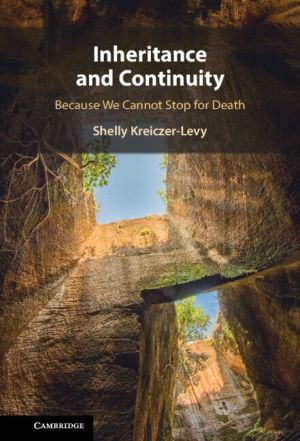
Inheritance and Continuity: Because We Cannot Stop for Death


ISBN13: 9781009870672
Published: February 2027
Publisher: Cambridge University Press
Country of Publication: UK
Format: Paperback
Price: Price on Application


Why does inheritance law persist in modern legal systems, and what justifies the transmission of property beyond death? This book develops a holistic theory of inheritance grounded in the concept of continuity. It moves beyond traditional accounts centered on testamentary freedom or family protection and argues that inheritance law responds to a fundamental problem created by mortality: the disruption of ownership at death. The book offers a theory that explains both testamentary freedom regimes and family-protection systems as alternative forms of continuity. It therefore enables a comparative analysis of different systems. It also advances a normative conception of continuity as a collaboration between the deceased giver and surviving recipients and, based on this conception, offers concrete criteria for evaluating legal doctrines across jurisdictions. Bringing mortality to the center of property theory, this work provides a coherent, comparative, and normatively rich account of inheritance law for scholars, students, and legal theorists.


Subjects:
Wills and Probate
Contents:
1. Introduction
2. The theoretical debate over post-mortem transfers
3. A theory of property and death
4. Vehicles for continuity
5. An introduction to forms of continuity
6. Testamentary freedom systems
7. Forced heirship systems
8. Family provision systems
9. Trusts
10. Digital assets
11. Rethinking post-mortem transfers
12. Concluding remarks on continuity and property







