
Wildy Logo
(020) 7242 5778
enquiries@wildy.com

Book of the Month

Cover of Toulson & Phipps on Confidentiality

Toulson & Phipps on Confidentiality

Price: £175.00

Advocacy: A Practical
Guide 2nd ed


 Peter Lyons, Chris Taylor


Welcome to Wildys

Watch


Judicial Cooperation in Commercial Litigation 3rd ed (The British Cross-Border Financial Centre World)


 Ian Kawaley, David Doyle, Shade Subair Williams


Offers for Newly Called Barristers & Students

Special Discounts for Newly Called & Students

Read More ...


Secondhand & Out of Print

Browse Secondhand Online

Read More...


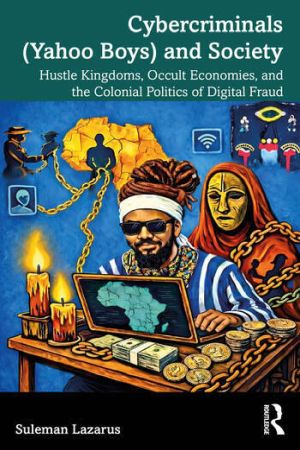
Cybercriminals (Yahoo Boys) and Society: Hustle Kingdoms, Occult Economies, and the Colonial Politics of Digital Fraud


ISBN13: 9781032947631
To be Published: August 2026
Publisher: Routledge
Country of Publication: UK
Format: Paperback
Price: £41.99


This book offers a comprehensive sociological account of cyber-enabled fraud in Africa south of the Sahara, centred on Nigeria but extending across Ghana, Cameroon, Côte d'Ivoire, Jamaica, and Southeast Asia. Drawing on over a decade of ethnographic research, conviction case files, court documents, interviews, and cultural analysis of Afrobeats music, it examines online fraud not as isolated wrongdoing but as a patterned social response to postcolonial inequality, blocked mobility, and institutional failure.

The book introduces the Tripartite Cybercrime Framework, a motivation-centred typology that classifies cybercrime as socio-economic, psychosocial, or geopolitical, shifting attention from technical mechanisms to underlying purpose. It also develops the concept of Hustle Kingdoms, underground fraud "academies" that mimic schooling while binding learners through spiritual oaths, psychological pressure, and economic dependency, complicating simple victim–offender binaries. Across comparative chapters, the book connects cultural repertoires of online fraud in Africa south of the Sahara to Southeast Asian scam compounds and argues that coercion should be understood as a spectrum, from overt confinement to socially embedded and spiritually enforced control. It concludes with clear policy and safeguarding implications for prevention, policing, sentencing, and victim support.

This book will be of interest to criminologists and sociologists studying cybercrime, fraud and financial crime, and informal economies. It will also be useful reading for scholars of cultural studies, social psychology, and African studies. It will also be valuable for policymakers and practitioners working on cybercrime prevention.


Subjects:
Criminology
Contents:
Introduction and Roadmap
PART I: FRAMING THE TERRAIN
1. Geographies of Cybercrime: Postcolonial Inequalities and the Spatial Production of Cybercriminals
2. The Tripartite Cybercrime Framework and the Particularities of Cybercrime in Nigeria
3. From Student Activism to Global Fraud: The Evolution of Nigerian Confraternities and Their Role in Cybercrime

PART II: INSTITUTIONS AND INFRASTRUCTURES OF CYBERCRIMINAL FORMATION
4. Hustle Kingdoms as Structural Strain? Alternative Institutions of Deviant Learning in Anglophone West Africa
5. Beyond Voluntary Deviance: Spiritual Coercion and the Victim Offender Overlap in Hustle Kingdoms
6. Do Mothers' Hands Both Bless and Bind? An Ethnographic Account of Yahoo Boys' Mothers' Associations (AYBM)
7. Is the Spirit World the Base of the Superstructure? Empirical Evidence for Inverting Orthodox Marxism in Nigerian Occult Economies

PART III: OFFENCES, SCRIPTS, AND NETWORKED OPERATIONS
8. Romance in Ruins and the Hustler’s Gospel of Love and Lies
9. United States v. Olugbenga Lawal: Romance Fraud, Business Email Compromise, and Transnational Money Laundering
10. Gendered Pathways to Deviance? Comparing Nigerian Male Online Fraudsters (Yahoo Boys) and Female Trafficked Sex Workers (Ashawo)

PART IV: CULTURAL GRAMMARS AND REGIONAL VARIANTS
11. Afrobeats and the Cultural Politics of Online Fraud (2007 to 2025)
12. Codes of Retaliation and Anti-Colonial Discourses in Digital Fraud: Ghana, Nigeria, and Jamaica
13. A Comparative Analysis of Internet Fraudsters: Nigeria, Ghana, Cameroon, and Côte d'Ivoire

PART V: GLOBAL SYNTHESIS
14. A Comparative Sociology of Fraud Factories and Cybercrime Academies: Southeast Asia and West Africa
PART VI: CONCLUSION
15. Conclusion









