
The eBooks we sell are sold as a single-user licence and are intended for the end user only.
The sale of some eBooks are restricted to certain countries. To alert you to such restrictions, please select the country of the billing address of your credit or debit card you wish to use for payment.
For further information see https://www.wildy.com/ebook-formats
Once the order is confirmed an e-mail will be sent to you to allow you to download the eBook. For UK purchases this will be automatic. For purchases outside the UK a member of staff will need to confirm the sale. (Staff are available to do this during normal business hours, Mon-Fri 8:30-17:00 UK time)
All eBooks are supplied firm sale and cannot be returned. If you believe there is a fault with your eBook then contact us on ebooks@wildy.com and we will help in resolving the issue. This does not affect your statutory rights.
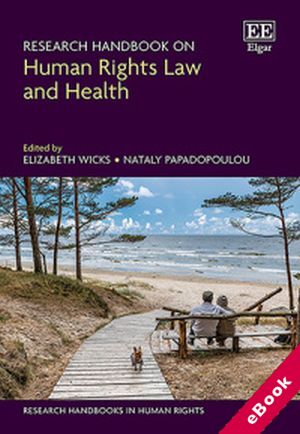
This Research Handbook examines the many ways in which health engages human rights law. It also explores current debates which challenge traditional perspectives of rights and identifies potential new directions in which human rights law might venture, including the legal status of medical devices, a human right to medicines and conscientious objections to assisted dying.
Elizabeth Wicks and Nataly Papadopoulou bring together renowned experts who pose important questions about the limits of human rights, and the law more broadly, as new threats and opportunities related to health emerge. The Research Handbook adopts a forward-looking perspective in which contributing authors challenge the status quo and seek to identify key future challenges for which new directions of human rights law can play a crucial, positive role in the betterment of health and health care provision. Chapters examine contemporary issues of concern such as health rights for migrants, assisted dying, surrogacy and abortion, access to health care for older persons and the need to protect landscapes for health.
This Research Handbook will be a vital tool for students and scholars of human rights law and health law. Its forward-thinking approach to both the role of human rights and the conceptualisation of health will also greatly benefit practising lawyers and legal policymakers seeking to reform the field.










