The eBooks we sell are sold as a single-user licence and are intended for the end user only.
The sale of some eBooks are restricted to certain countries. To alert you to such restrictions, please select the country of the billing address of your credit or debit card you wish to use for payment.
For further information see https://www.wildy.com/ebook-formats
Once the order is confirmed an e-mail will be sent to you to allow you to download the eBook. For UK purchases this will be automatic. For purchases outside the UK a member of staff will need to confirm the sale. (Staff are available to do this during normal business hours, Mon-Fri 8:30-17:00 UK time)
All eBooks are supplied firm sale and cannot be returned. If you believe there is a fault with your eBook then contact us on ebooks@wildy.com and we will help in resolving the issue. This does not affect your statutory rights.
Due to a technical issue some ebooks are not available to order.
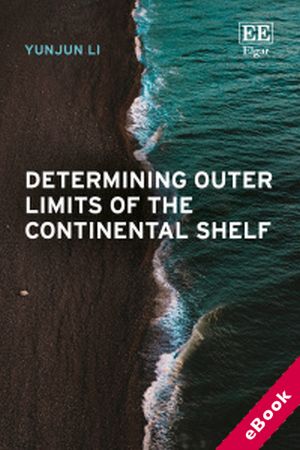
This perceptive book analyses the determination of outer limits of the continental shelf as provided in the 1982 United Nations Convention on the Law of the Sea, exploring its application under the influence of the Commission on the Limits of the Continental Shelf (CLCS).
Yunjun Li illustrates how the CLCS has not efficiently achieved its aim of supporting states determining the outer limits of the continental shelf. She examines the central rules adopted by the CLCS, and reflects on their practical application and the problems they engender. The book provides a comprehensive analysis of how States have responded to the recommendations issued by the CLCS, assessing the impact of the work of the CLCS on coastal States. It further investigates the relationship between the CLCS as a scientific body and international judicial bodies by examining legal decisions concerning the delimitation of the continental shelf beyond 200 nautical miles adopted by the latter in the absence of recommendations.
This illuminating book is a vital resource for students and scholars of public international law and law of the sea. Thorough and detailed, it will also benefit policymakers and practitioners working in the related area.