The eBooks we sell are sold as a single-user licence and are intended for the end user only.
The sale of some eBooks are restricted to certain countries. To alert you to such restrictions, please select the country of the billing address of your credit or debit card you wish to use for payment.
For further information see https://www.wildy.com/ebook-formats
Once the order is confirmed an e-mail will be sent to you to allow you to download the eBook. For UK purchases this will be automatic. For purchases outside the UK a member of staff will need to confirm the sale. (Staff are available to do this during normal business hours, Mon-Fri 8:30-17:00 UK time)
All eBooks are supplied firm sale and cannot be returned. If you believe there is a fault with your eBook then contact us on ebooks@wildy.com and we will help in resolving the issue. This does not affect your statutory rights.
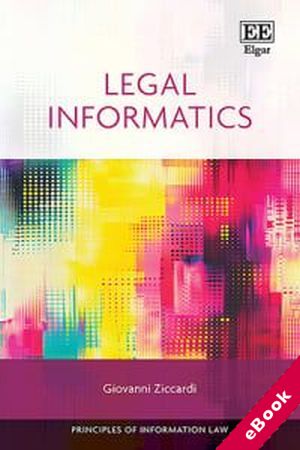
In this timely book, Giovanni Ziccardi presents a structured analytical overview of legal informatics as a discipline that connects legal professionals to the digital landscape. He analyses the transformative impact of technology and artificial intelligence (AI) on the field, including improved accessibility to information and greater efficiency in justice administration.
Legal Informatics addresses key topics encompassing the evolution of legal databases, the role of AI in aiding legal decision-making and research, and the ethical challenges posed by automation, such as increased bias. It explores how enhanced data analysis fosters understanding of legal applications and patterns, and the implications of cybersecurity risks, including privacy and rights concerns. Ziccardi examines the use of big data, the growing role of cloud computing, and digital computer ethics in practice. Ultimately, he positions technology as central to the present and future of law, while grounding it in the field’s history and pioneers.
Assessing the complex benefits and drawbacks of digital technologies on the legal system, this book is a vital resource for scholars and students of internet and technology law, and information and media law. It is also beneficial for jurists, lawyers, and judges who are looking to expand their digital literacy.