
The eBooks we sell are sold as a single-user licence and are intended for the end user only.
The sale of some eBooks are restricted to certain countries. To alert you to such restrictions, please select the country of the billing address of your credit or debit card you wish to use for payment.
For further information see https://www.wildy.com/ebook-formats
Once the order is confirmed an e-mail will be sent to you to allow you to download the eBook. For UK purchases this will be automatic. For purchases outside the UK a member of staff will need to confirm the sale. (Staff are available to do this during normal business hours, Mon-Fri 8:30-17:00 UK time)
All eBooks are supplied firm sale and cannot be returned. If you believe there is a fault with your eBook then contact us on ebooks@wildy.com and we will help in resolving the issue. This does not affect your statutory rights.
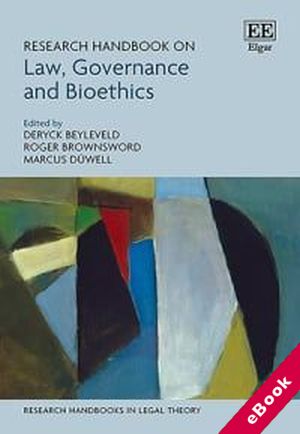
This timely Research Handbook examines the key challenges for the governance of biomedicine and the life sciences. It explores the impact of significant political, technological and ecological developments on international governance and considers ethics in times of global crisis.
Leading experts discuss the ways in which digitalization and AI have disrupted communication and knowledge infrastructure, while highlighting the threats posed by climate change and biodiversity loss to ecological stability. They investigate how the system of governance by law has been challenged by the erosion of public spaces and democratic political systems, while regulatory tools such as ethics committees, participatory structures and self-regulation are unprepared for emerging issues. The Research Handbook demonstrates the importance of developing novel methodological tools to interpret these problems within the field of bioethics. It further proposes a roadmap for future research and practice, outlining how the life sciences can provide new possibilities for human health and well-being.
Scholars and students of law and society, legal philosophy and legal theory will greatly benefit from this illuminating Research Handbook. It is also a useful resource for those studying bioethics, moral philosophy and the social sciences.











