
The eBooks we sell are sold as a single-user licence and are intended for the end user only.
The sale of some eBooks are restricted to certain countries. To alert you to such restrictions, please select the country of the billing address of your credit or debit card you wish to use for payment.
For further information see https://www.wildy.com/ebook-formats
Once the order is confirmed an e-mail will be sent to you to allow you to download the eBook. For UK purchases this will be automatic. For purchases outside the UK a member of staff will need to confirm the sale. (Staff are available to do this during normal business hours, Mon-Fri 8:30-17:00 UK time)
All eBooks are supplied firm sale and cannot be returned. If you believe there is a fault with your eBook then contact us on ebooks@wildy.com and we will help in resolving the issue. This does not affect your statutory rights.
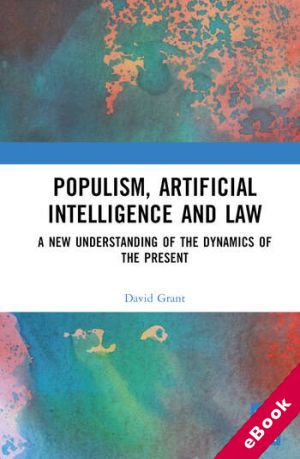
Political systems across much of the West are now subject to populist disruption, which often takes an anti-Constitutional form. This interdisciplinary book argues that the current analysis of anti-Constitutional populism, while often astute, is focused far too narrowly. It is held here that due to an obscured complex of dynamics that has shaped the history of the West since its inception and which remains active today, we do not understand the present. This complex not only explains the current disruptions across the fields of contemporary religion, politics, economics and emerging artificial intelligence but also how these disruptions derive each from originary sources. This work thereby explains not only the manner in which this complex has functioned across historical time but also why it is that its inherent, unresolvable flaws have triggered the shifts between these key fields as well as the intractability of these present disruptions. It is this flawed complex of factors that has led to current conflicts about abortion reform, political populism, the failure of neoliberalism and the imminent quantum shift in generative artificial intelligence. It is argued that in this, law is heavily implicated, especially at the constitutional level. Presenting a forensic examination of the root causes of all these disruptions, the study provides a toolbox of ideas with which to confront these challenges.
This is a book of originality and significance, which will make fascinating reading for academics and researchers working in the areas of Socio-legal Studies, Legal Philosophy, Political Science, Theology, AI and Neuroscience.










