
The eBooks we sell are sold as a single-user licence and are intended for the end user only.
The sale of some eBooks are restricted to certain countries. To alert you to such restrictions, please select the country of the billing address of your credit or debit card you wish to use for payment.
For further information see https://www.wildy.com/ebook-formats
Once the order is confirmed an e-mail will be sent to you to allow you to download the eBook. For UK purchases this will be automatic. For purchases outside the UK a member of staff will need to confirm the sale. (Staff are available to do this during normal business hours, Mon-Fri 8:30-17:00 UK time)
All eBooks are supplied firm sale and cannot be returned. If you believe there is a fault with your eBook then contact us on ebooks@wildy.com and we will help in resolving the issue. This does not affect your statutory rights.
Due to a technical issue some ebooks are not available to order.
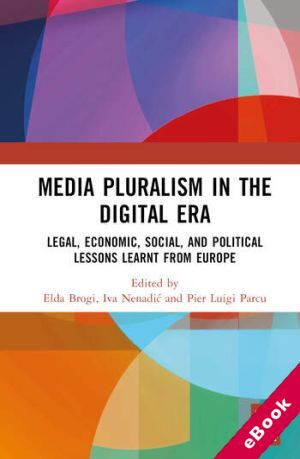
Bringing together scholars, journalists, and researchers from 27 European countries, this book provides a comparative and longitudinal analysis of the evolvement of conditions and standards relevant for sustainable, free, and plural media and journalism in Europe in the last 10 years.
Approaching the challenging and ever-changing concept of media pluralism from various complementary and sometimes conflicting angles, combining legal, economic, social, and political perspectives, chapters provide a holistic account of the concept of media pluralism, a key condition for a well-functioning democracy. This book draws on data from the Media Pluralism Monitor project, a scientific tool designed and implemented on a regular basis to document the health of media ecosystems, to provide insights into central dimensions of media systems across the EU and candidate countries. These include:
Offering a comprehensive overview of key areas of EU media policy, causes and solutions for the media economic struggle, and innovative examples of business models for journalism in the digital age, this book is recommended reading for advanced students and researchers of media policy and regulation, as well as policymakers.










