
The eBooks we sell are sold as a single-user licence and are intended for the end user only.
The sale of some eBooks are restricted to certain countries. To alert you to such restrictions, please select the country of the billing address of your credit or debit card you wish to use for payment.
For further information see https://www.wildy.com/ebook-formats
Once the order is confirmed an e-mail will be sent to you to allow you to download the eBook. For UK purchases this will be automatic. For purchases outside the UK a member of staff will need to confirm the sale. (Staff are available to do this during normal business hours, Mon-Fri 8:30-17:00 UK time)
All eBooks are supplied firm sale and cannot be returned. If you believe there is a fault with your eBook then contact us on ebooks@wildy.com and we will help in resolving the issue. This does not affect your statutory rights.
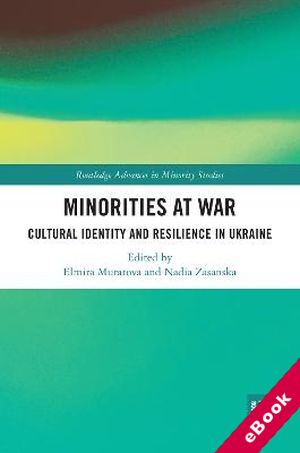
This collection focuses on Ukraine’s ethnic, religious, and linguistic minorities who in recent years have undergone forced displacement, emigration, the destruction of familiar ways of life, and a transformation of identity and language behaviour. The book examines the impact of Russia's war against Ukraine, which began with the annexation of Crimea and the war in Donbas in 2014. It shows what happens to the cultural identities of minority groups and considers the mechanisms and components of their resilience in times of crisis. Key themes addressed include minorities’ collective memory and survival strategies, mobilization and humanitarianism, forced displacement and the preservation of identity. While most works on the Russo-Ukrainian war focus on the international context and the causes of the war and its humanitarian consequences for the population of Ukraine and the region as a whole, this book seeks to mainstream the issue of cultural minorities, which is often neglected in the coverage of this type of conflict.
The book will be of interest to academics, researchers and policy-makers working in the areas of Law, Political Science, Anthropology, Human Geography, Religious Studies and War and Peace Studies.











