
The eBooks we sell are sold as a single-user licence and are intended for the end user only.
The sale of some eBooks are restricted to certain countries. To alert you to such restrictions, please select the country of the billing address of your credit or debit card you wish to use for payment.
For further information see https://www.wildy.com/ebook-formats
Once the order is confirmed an e-mail will be sent to you to allow you to download the eBook. For UK purchases this will be automatic. For purchases outside the UK a member of staff will need to confirm the sale. (Staff are available to do this during normal business hours, Mon-Fri 8:30-17:00 UK time)
All eBooks are supplied firm sale and cannot be returned. If you believe there is a fault with your eBook then contact us on ebooks@wildy.com and we will help in resolving the issue. This does not affect your statutory rights.
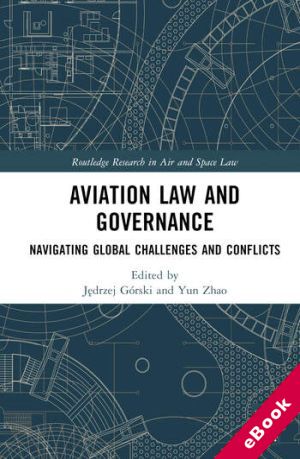
Exploring the intricate relationship between law, economics, and global politics, this book examines the regulatory environment of the aviation industry.
Tracing the historical development of aviation law, the book has a particular focus on how economic polycentrism and the liberal international economic order have influenced the sector's regulatory framework. It discusses the aviation industry's responses to unforeseen global events, such as the COVID-19 pandemic and geopolitical conflicts, providing a detailed analysis of the legal mechanisms that ensure industry stability and resilience. Key topics include the role of arbitration in resolving disputes, the impact of international regulations, and the critical contributions of both public and private actors in shaping aviation law. Additionally, the book explores the challenges posed by new and emerging technologies, such as the increasing automation in aviation systems and the legal considerations surrounding cybersecurity in aviation operations. The collection also features diverse international case studies, offering practical examples of legal challenges and solutions in different contexts. By examining the intersection of various legal disciplines and the global nature of aviation, this comprehensive exploration not only reflects on past and present challenges but also provides forward-looking insights into the future of aviation law.
The book will be of interest to researchers in the field of air transport law and dispute resolution, offering a thorough understanding of the legal and economic complexities facing the industry today.










