
The eBooks we sell are sold as a single-user licence and are intended for the end user only.
The sale of some eBooks are restricted to certain countries. To alert you to such restrictions, please select the country of the billing address of your credit or debit card you wish to use for payment.
For further information see https://www.wildy.com/ebook-formats
Once the order is confirmed an e-mail will be sent to you to allow you to download the eBook. For UK purchases this will be automatic. For purchases outside the UK a member of staff will need to confirm the sale. (Staff are available to do this during normal business hours, Mon-Fri 8:30-17:00 UK time)
All eBooks are supplied firm sale and cannot be returned. If you believe there is a fault with your eBook then contact us on ebooks@wildy.com and we will help in resolving the issue. This does not affect your statutory rights.
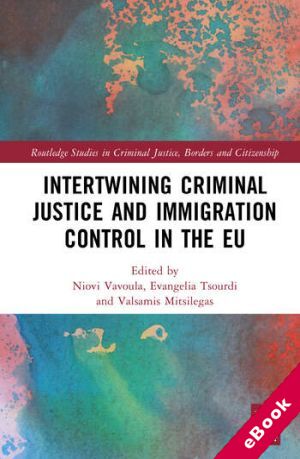
This book offers a contemporary understanding of the state of the art of ‘crimmigration’ with a focus on the European Union and challenges this paradigm of intersecting criminal justice and immigration control.
The contributions to this book explore the conceptual and philosophical underpinnings of EU and national policies intertwining criminal and migration law, as well as their practical use (and abuse). They analyse migration control through criminal law from multidisciplinary and interdisciplinary perspectives incorporating insights from law, philosophy, and criminology. The book revisits fundamental questions on the suitability of criminal law to regulate and govern migration and provide insights as to whether and how the law should be amended to limit the negative consequences of the criminalisation of migration. Authors critique key legal challenges crimmigration poses, in terms of legality, fundamental rights, and rule of law adherence. Finally, this volume outlines, through concrete examples, how criminalisation of migration translates into the emergence of hostile environments for migrants and those who assist them.
This book will be of interest to criminologists, sociologists, legal scholars, and all those engaged in studies on migration and the European Union.










