
The eBooks we sell are sold as a single-user licence and are intended for the end user only.
The sale of some eBooks are restricted to certain countries. To alert you to such restrictions, please select the country of the billing address of your credit or debit card you wish to use for payment.
For further information see https://www.wildy.com/ebook-formats
Once the order is confirmed an e-mail will be sent to you to allow you to download the eBook. For UK purchases this will be automatic. For purchases outside the UK a member of staff will need to confirm the sale. (Staff are available to do this during normal business hours, Mon-Fri 8:30-17:00 UK time)
All eBooks are supplied firm sale and cannot be returned. If you believe there is a fault with your eBook then contact us on ebooks@wildy.com and we will help in resolving the issue. This does not affect your statutory rights.
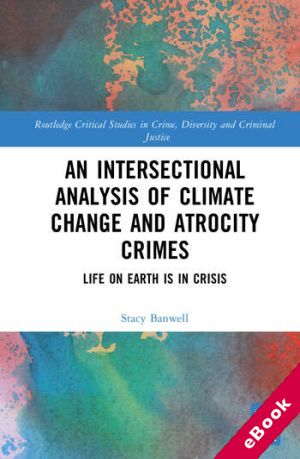
Examining the relationship between anthropogenic climate change and atrocity crimes, this book analyses how gender, race, and species hierarchies shape experiences of and responses to the climate emergency.
Investigating the nexus between human-induced climate change and atrocity crimes, this book champions a paradigm shift from human-centered approaches toward multi-species justice to mitigate the ramifications of this existential crisis. Readers will acquire a nuanced understanding of how prevailing climate crisis strategies are deficient: they marginalize the experiences of men and boys, prioritize Global North interests over the lives of those in the Global South, and elevate human rights above those of other living beings. The research presents groundbreaking solutions through historical and contemporary case studies, a comprehensive assessment of environmental insecurity factors, and two innovative revisions to the definition of ecocide. Additionally, it proposes viable alternatives to capitalism, including a transition from economic globalization to global economic equity through ecological debt reparations, offering a comprehensive framework for achieving multi-species climate justice and establishing environmental destruction as an international crime.
An Intersectional Analysis of Climate Change and Atrocity Crimes will be of great value to students and scholars in Green Criminology, War Studies, Security Studies, Law, History, Geography, Anthropology, and Cultural Studies. It also serves as a valuable resource for policy architects, Responsibility to Protect professionals, humanitarian organizations, human rights advocates, security specialists, and sustainability experts.










