
The eBooks we sell are sold as a single-user licence and are intended for the end user only.
The sale of some eBooks are restricted to certain countries. To alert you to such restrictions, please select the country of the billing address of your credit or debit card you wish to use for payment.
For further information see https://www.wildy.com/ebook-formats
Once the order is confirmed an e-mail will be sent to you to allow you to download the eBook. For UK purchases this will be automatic. For purchases outside the UK a member of staff will need to confirm the sale. (Staff are available to do this during normal business hours, Mon-Fri 8:30-17:00 UK time)
All eBooks are supplied firm sale and cannot be returned. If you believe there is a fault with your eBook then contact us on ebooks@wildy.com and we will help in resolving the issue. This does not affect your statutory rights.
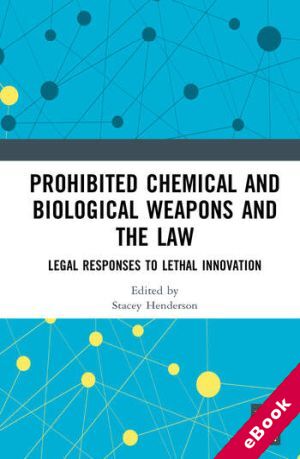
Scientific advances in biological and chemical sciences can offer significant benefits to humanity, but these discoveries may also result in the proliferation of novel classes of weapons and new uses for such weapons. This book explores the current challenges, risks, and opportunities posed by new scientific discoveries in this area.
Focusing on non-human consequences of the use of chemical and biological weapons, issues discussed include their environmental impact; the use of herbicides in armed conflicts; the dangers presented by the transport of chemical and biological agents; the impact of technology on the development and/or manufacture of chemical and biological agents; and the various implementation efforts at national level across countries and regions. The work examines whether the prohibitions on the use of chemical and biological weapons are being weakened, or whether international responses to allegations of their use in recent armed conflicts are actually reinforcing the prohibitions.
The book will be of interest to academics, researchers and policy-makers working in the areas of International Humanitarian Law; Security Law, Disarmament, Non-proliferation and Arms Control, International Relations, and Security Studies.










