The eBooks we sell are sold as a single-user licence and are intended for the end user only.
The sale of some eBooks are restricted to certain countries. To alert you to such restrictions, please select the country of the billing address of your credit or debit card you wish to use for payment.
For further information see https://www.wildy.com/ebook-formats
Once the order is confirmed an e-mail will be sent to you to allow you to download the eBook. For UK purchases this will be automatic. For purchases outside the UK a member of staff will need to confirm the sale. (Staff are available to do this during normal business hours, Mon-Fri 8:30-17:00 UK time)
All eBooks are supplied firm sale and cannot be returned. If you believe there is a fault with your eBook then contact us on ebooks@wildy.com and we will help in resolving the issue. This does not affect your statutory rights.
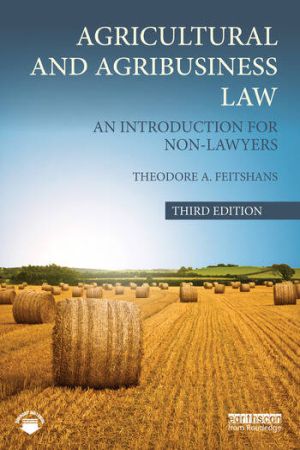
This textbook provides a comprehensive introduction to the key concepts of agricultural and agribusiness law in the United States, offering an accessible guide for students and professionals alike.
The fully revised and updated edition addresses significant legal developments, including changes in trade, taxation, water law, intellectual property, and animal law. Reflecting a growing number of farms in financial distress, new materials on workouts and debt relief, including Chapter 12 of the U.S. Bankruptcy Code, have been added. A new chapter explores the emerging legal landscape surrounding industrial hemp and marijuana production. The text also reflects the absence of a comprehensive farm bill since the 2018 Farm Bill and examines the legal and policy impacts of the Trump and Biden Administrations. In an era where legal information is increasingly accessible online, the book delves into the challenges posed by cybercrime and misinformation, equipping readers to discern reliable sources from unreliable ones. Designed for students with little or no legal background, the text helps readers identify legal issues that may require professional consultation. Each concise chapter focuses on a specific legal topic relevant to agriculture and agribusiness, covering both federal law and illustrative examples of state law. In addition to foundational topics such as contracts, property law, and estate planning, the book addresses contemporary issues like organic certification, genetically engineered crops, and food safety. It highlights the broad scope of agricultural law, extending beyond farming to include agribusiness professionals who provide services, inputs, and act as intermediaries between farmers and consumers. Additional online resources are provided, including quiz questions for each chapter and PowerPoint slides.
This textbook is essential for students of agriculture and land-based services with little or no legal background, as well as those studying agribusiness. The book also serves as a useful reference for agricultural professionals.