
The eBooks we sell are sold as a single-user licence and are intended for the end user only.
The sale of some eBooks are restricted to certain countries. To alert you to such restrictions, please select the country of the billing address of your credit or debit card you wish to use for payment.
For further information see https://www.wildy.com/ebook-formats
Once the order is confirmed an e-mail will be sent to you to allow you to download the eBook. For UK purchases this will be automatic. For purchases outside the UK a member of staff will need to confirm the sale. (Staff are available to do this during normal business hours, Mon-Fri 8:30-17:00 UK time)
All eBooks are supplied firm sale and cannot be returned. If you believe there is a fault with your eBook then contact us on ebooks@wildy.com and we will help in resolving the issue. This does not affect your statutory rights.
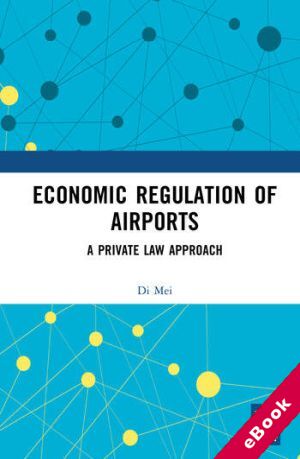
This book explores airport charges regulation, presenting a fresh perspective on a crucial yet marginalized subject. Providing a clear pathway for regulation of the economic aspects of airports, specifically charges, the book employs an adaptable approach grounded in private law principles.
Unlike the conventional command-and-control model of traditional regulation that once governed airports, the book contends that an agile private law approach offers a more responsive and efficient means of overseeing airport charges in the face of increasing complexity within the industry. Within this overarching approach, two key instruments emerge. Firstly, the book demonstrates the effectiveness of contracts as a powerful tool for integrating regulations on airport charges. Secondly, the cultivation of robust corporate governance is posited as a mechanism that naturally instigates effective regulation. Through illuminating the efficacy of a private law approach, the book demonstrates how this innovative approach works not only as a regulatory mechanism for airport charges, but can also be applied within the broader spectrum of infrastructure regulation.
The book will be of interest to researchers in the field of air law, contract law, corporate law, competition law, and aviation business and management, employing case studies to illustrate its points.











