
The eBooks we sell are sold as a single-user licence and are intended for the end user only.
The sale of some eBooks are restricted to certain countries. To alert you to such restrictions, please select the country of the billing address of your credit or debit card you wish to use for payment.
For further information see https://www.wildy.com/ebook-formats
Once the order is confirmed an e-mail will be sent to you to allow you to download the eBook. For UK purchases this will be automatic. For purchases outside the UK a member of staff will need to confirm the sale. (Staff are available to do this during normal business hours, Mon-Fri 8:30-17:00 UK time)
All eBooks are supplied firm sale and cannot be returned. If you believe there is a fault with your eBook then contact us on ebooks@wildy.com and we will help in resolving the issue. This does not affect your statutory rights.
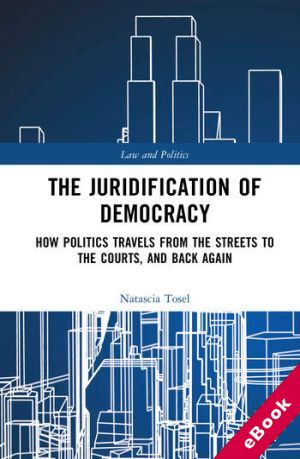
This book examines what it identifies as an increasing juridification of politics. This term refers to the use of law by both state and non-state social actors to advance their political demands and strategies.
Juridification is often portrayed as a depoliticising, even democratising, process; it is frequently attributed to the logics of neoliberal governance. In this view, a small number of litigants appealing to a few unelected judges for political change seems to bypass representative institutions and, with them, the democratic will. This book challenges that narrative. By tracing the genealogy of juridification and examining its performative role in present-day democratic practices, it offers a more nuanced understanding of the relationship between juridification and democracy. Combining theoretical inquiry with case studies of human rights adjudication, it reveals how courts have become arenas of political struggle where the supralegal values of democracy are named, claimed, and contested, and how this process reverberates far beyond the courtroom, supplementing rather than supplanting democratic decision-making.
The Juridification of Democracy will appeal to scholars and post-graduate students in the fields of political theory, law, critical theory, continental philosophy, socio-legal studies, and social and juridical anthropology.











