We will be closed from 5pm BST on Friday 1st May for the Early May bank holiday, re-opening at 8.30am BST on Tuesday 5th May. Any orders placed during this period will be processed when we re-open.
The device(s) you use to access the eBook content must be authorized with an Adobe ID before you download the product otherwise it will fail to register correctly.
For further information see https://www.wildy.com/ebook-formats
Once the order is confirmed an automated e-mail will be sent to you to allow you to download the eBook.
All eBooks are supplied firm sale and cannot be returned. If you believe there is a fault with your eBook then contact us on ebooks@wildy.com and we will help in resolving the issue. This does not affect your statutory rights.
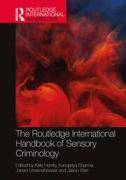
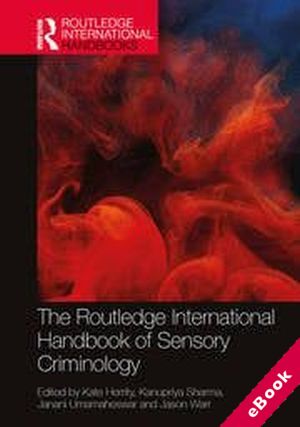
The Routledge International Handbook of Sensory Criminology reimagines what criminology can become when we take the senses seriously. Centring the sensory as fundamental to the experience of harm, justice, and resistance, this groundbreaking volume brings together 29 chapters from scholars across disciplines, career stages, and geographies. Together, they explore how power is heard, felt, inhaled, touched, and moved through, from courtrooms and prisons to museums, marine ecologies, colonial archives, transitional spaces, high-crime zones and urban streets.
The Handbook opens up new pathways for criminological inquiry, offering rich, situated analysis of how the sensory shapes and is shaped by structures of criminalisation, exclusion, and survival. Contributors engage themes including punishment, victimhood, environmental harm, archival memory, decolonial justice, and innovative methodologies. Rather than offering a prescriptive vision, the volume offers a provocation: to expand the criminological imagination and embrace new ways of knowing, sensing, and intervening.
This Handbook is an essential reading for students, scholars and early career researchers in criminology, sociology, law, anthropology, geography, gender studies, politics, and cultural studies, as well as those interested in decolonial approaches, sensory methods, and interdisciplinary justice research.