
The eBooks we sell are sold as a single-user licence and are intended for the end user only.
The sale of some eBooks are restricted to certain countries. To alert you to such restrictions, please select the country of the billing address of your credit or debit card you wish to use for payment.
For further information see https://www.wildy.com/ebook-formats
Once the order is confirmed an e-mail will be sent to you to allow you to download the eBook. For UK purchases this will be automatic. For purchases outside the UK a member of staff will need to confirm the sale. (Staff are available to do this during normal business hours, Mon-Fri 8:30-17:00 UK time)
All eBooks are supplied firm sale and cannot be returned. If you believe there is a fault with your eBook then contact us on ebooks@wildy.com and we will help in resolving the issue. This does not affect your statutory rights.
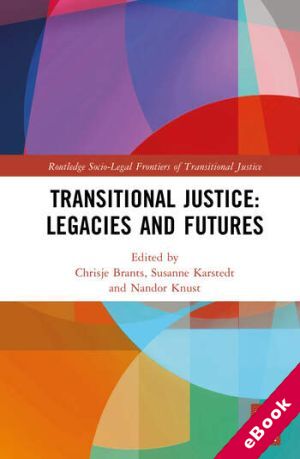
This volume explores the futures of transitional justice by presenting its multiple pasts and presents across nearly half a century. It canvasses the legacies of achievements and failures, of high hopes and expectations, and equally of disappointment and disillusion across a range of institutions, including the International Criminal Court, global regions and local settings. The authors critically assess a range of different transitional justice mechanisms including prosecutions, reparations, truth-seeking, and institutional reform, as well as individual and public apologies for grave breaches of human rights. Their focus on local conditions foregrounds actors and networks, politics and the political in transitional justice processes. The book presents evidence, critical facts and analyses through a multidisciplinary lens, featuring criminologists, international criminal law scholars, political scientists, sociologists, social psychologists, and anthropologists. It combines theoretical and empirical contributions to achieve fresh perspectives on transitional justice. The first part interrogates transitional justice's impact. The second examines how transitional justice mechanisms are embedded within social and political structures. The third explores voice and participation in transitional justice discourses and practices, identifying key lessons for the future.
By integrating diverse disciplinary perspectives with both theoretical frameworks and empirical evidence, this comprehensive volume offers valuable insights into how societies address past traumas and (re)gain a future. The book serves as an essential resource for researchers, practitioners, and students seeking to explore innovative research avenues in transitional justice and understand the complex dynamics of post-conflict and post-authoritarian justice processes.










