
The eBooks we sell are sold as a single-user licence and are intended for the end user only.
The sale of some eBooks are restricted to certain countries. To alert you to such restrictions, please select the country of the billing address of your credit or debit card you wish to use for payment.
For further information see https://www.wildy.com/ebook-formats
Once the order is confirmed an e-mail will be sent to you to allow you to download the eBook. For UK purchases this will be automatic. For purchases outside the UK a member of staff will need to confirm the sale. (Staff are available to do this during normal business hours, Mon-Fri 8:30-17:00 UK time)
All eBooks are supplied firm sale and cannot be returned. If you believe there is a fault with your eBook then contact us on ebooks@wildy.com and we will help in resolving the issue. This does not affect your statutory rights.
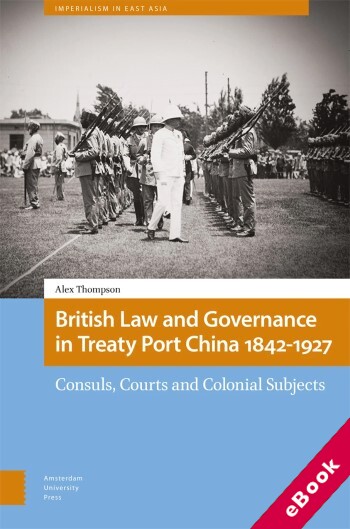
In putting extraterritoriality into practice in the treaty ports, the British state did not simply withdraw rights from the Chinese state; it inhabited the space made by extraterritoriality by building institutions and engaging in practices which had consequences for the development of the treaty ports, and which need to be at the forefront of any attempt to understand colonialism in China. Through a focus both on the creation of law and institutions, and also on the management of British ‘problem populations’ – violent Europeans and ‘martial’ Indians – this book provides a revision of the history of empire and colonialism in China, explaining important features which have to date been glossed over in studies of other aspects of treaty port colonialism. Colonialism in China casts a long shadow, but key aspects of the British state’s central role in this history have before now been little understood.
About the author:
Alexander Thompson studied Chinese at the University of Leeds and in Beijing. He has worked for the British government in China and also as a legal professional in the UK. He obtained his PhD in History from the University of Bristol in 2018.










