
Wildy Logo
(020) 7242 5778
enquiries@wildy.com

Book of the Month

Cover of Arbitration of Commercial Disputes: English and International Law and Practice

Arbitration of Commercial Disputes: English and International Law and Practice

Price: £225.00

Land Registration Manual
4th ed


 Ash Jones


Welcome to Wildys

Watch


Judicial Cooperation in Commercial Litigation 3rd ed (The British Cross-Border Financial Centre World)


 Ian Kawaley, David Doyle, Shade Subair Williams


Offers for Newly Called Barristers & Students

Special Discounts for Newly Called & Students

Read More ...


Secondhand & Out of Print

Browse Secondhand Online

Read More...


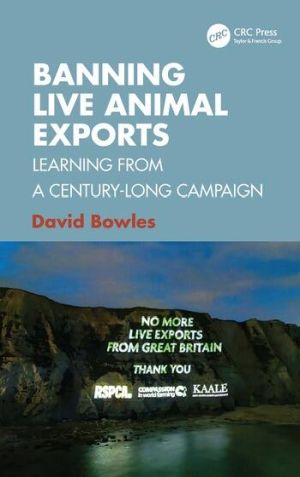
Banning Live Animal Exports: Learning from a Century-Long Campaign


ISBN13: 9781041147428
To be Published: June 2026
Publisher: CRC Press
Country of Publication: UK
Format: Paperback
Price: £29.99


This is the first book to look at live exports of animals, one of the most emotive animal welfare issues still needing to be solved. The UK’s historical concern with the exportation of animals to Europe has resulted in the creation of organisations to oppose it, mass demonstrations and even people dying in their efforts to stop the practice. The only animal welfare issue raised as a Brexit dividend, live exports were finally stopped in 2025. Why did it take 100 years to achieve this result?

In this book, David Bowles explores why live export of animals ever happened and why it ended, examining the economic, social and public opinion drivers, Britain’s challenging relationship with Europe, and the different species impacted. It assesses campaigns to stop the trade in horses, sheep, cattle and calves from eight different countries, and determines why some were successful whilst others have increased rather than stopped. For instance,

  • How was the First World War important in stopping the live export of horses from Britain?
  • Why did live exports of cattle start after the 2nd World War and how was the British trade stopped?
  • Why did Australia ban the live exports of sheep but not cattle?
  • Do agricultural subsidies encourage or curtail live exports?
  • How can you construct a live exports ban and remain consistent with international trade and animal welfare rules?
  • How important was Brexit in the decision to ban live export of animals? and
  • Can other countries follow the UK and Australia in the future as campaigning in developing and importing countries starts?

Delving into campaigning tactics, Bowles asks whether the British ban is the beginning of the end for all live exports of animals or just a curious anomaly, specific to a so-called nation of animal lovers.

As well as being highly relevant for those in animal welfare, this book offers insights for anybody in social/political advocacy, campaigning and activism, regardless of the issue.


Subjects:
Animal Law
Contents:
Preface
Acknowledgments
Chapter 1. Introduction
Chapter 2. Changes in understanding of animal welfare leads to the first welfare laws on farm transport
Chapter 3. Early success: the campaign to end live exports of horses
Chapter 4. The rise of harmonised laws and protests
Chapter 5. The beginning of the end: the impact of BSE and creating new markets
Chapter 6. The impact of regional and global trade rules on export bans
Chapter 7. The ease of replicating a live exports ban in the European Union
Chapter 8. The ease of replicating a UK live exports ban in Australia
Chapter 9. The ease of replicating a UK live exports ban in New Zealand, South Africa and Brazil
Chapter 10. The Economics of live exports
Chapter 11. Conclusions







