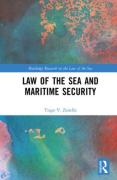
Focusing on the law of the sea and international humanitarian law, this book provides a comprehensive examination of sea drones within international law. It clarifies how maritime autonomous and unmanned systems fit within existing legal frameworks, identify where rules require reinterpretation, and demonstrate that sea drones do not operate in a legal vacuum. Instead, the book argues that these systems can be coherently integrated into the current legal order through doctrinal evolution rather than new treaty making. Drawing on State practice, jurisprudence, and technological realities, it shows how sea drones challenge traditional concepts of warships, naval warfare, attribution, and accountability.
Structured in three parts, the book first demonstrates why the legal classification of sea drones is foundational for all subsequent regulatory questions. It clarifies the limits of the warship definition under UNCLOS and establishes the conditions under which sea drones qualify instead as means of warfare. The second part analyses the regulatory framework applicable to sea drones, including rules of engagement, weapons review obligations, and the core principles of international humanitarian law. The third part examines the status and obligations of actors involved in sea drone operations (e.g., remote operators, AI developers, and coders) and develops a human anchored accountability model that rejects machine responsibility and reinforces the centrality of human decision making.
Written for scholars, practitioners, military lawyers, policymakers, and researchers working on autonomy and maritime security, the book provides a structured, authoritative guide to the legal status, operational use, and humanitarian implications of sea drones.