The eBooks we sell are sold as a single-user licence and are intended for the end user only.
The sale of some eBooks are restricted to certain countries. To alert you to such restrictions, please select the country of the billing address of your credit or debit card you wish to use for payment.
For further information see https://www.wildy.com/ebook-formats
Once the order is confirmed an e-mail will be sent to you to allow you to download the eBook. For UK purchases this will be automatic. For purchases outside the UK a member of staff will need to confirm the sale. (Staff are available to do this during normal business hours, Mon-Fri 8:30-17:00 UK time)
All eBooks are supplied firm sale and cannot be returned. If you believe there is a fault with your eBook then contact us on ebooks@wildy.com and we will help in resolving the issue. This does not affect your statutory rights.
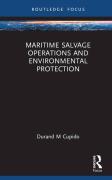
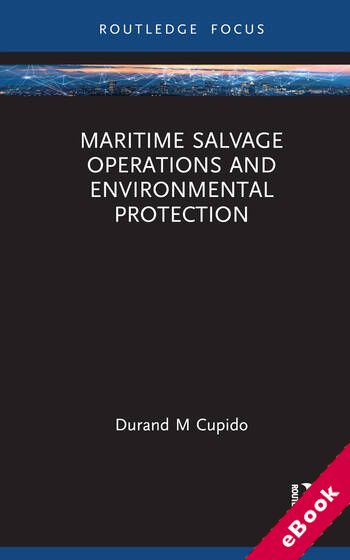
This book questions the use of salvage law as legal regulatory framework for the remuneration of environmental services in salvage operations, proposing that such services should be based on direct contracting between commercial salvors and coastal States. Adopting an environment-first approach, it argues that direct contracting better serves and promotes environmental protection outcomes. It also takes a functional view of the law as a tool to promote values and sought outcomes. Salvage operations are recognised as a first line of defence against pollution following shipping incidents. Although regulated under the law of salvage, these operations form an integral component of a framework of environmental protection measures regulated under different legal instruments or laws. The law of salvage fails to effectively integrate salvage operations in broader pollution response mechanisms because it does not aligns comfortably with this framework of laws.
Despite the emphasis on environmental protection in the 1989 London Salvage Convention, the Convention maintains the traditional notion of salvage operations as a service to property, while environmental outcomes and the remuneration of environmental services are positioned as a secondary outcome of the law of salvage. This book argues that directly contracting for environmental services bolsters the primacy of environmental protection and the functional use of law to further environmental protection and policy formulation. Direct contracting between coastal States and Salvors for environmental services complements existing practices and pollution response mechanisms and provides a sound legal basis for the effective realisation of salvage operations as a first line of defence against pollution following shipping incidents without fundamentally altering the established commercial identity of the traditional law of salvage. This book will be key reading for students, academics and practitioners working at the intersection of shipping and environmental law.