
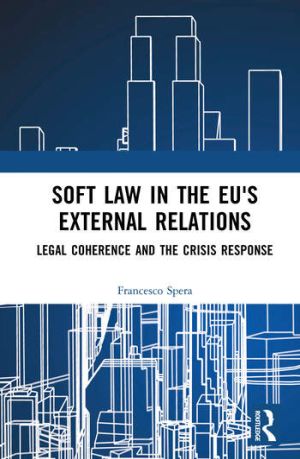
This book provides the first comprehensive analysis of the European Union’s use of soft law in its external relations, focusing on its legal consistency with the EU Treaties principles and within the EU integration process.
As the EU increasingly turns to informal tools to address international crises in sensitive areas— migration, security, and energy—it offers a comprehensive legal and theoretical analysis of soft law’s role in shaping the EU’s identity as a global actor. Instead of viewing soft law as a minor or secondary issue, this book sees it as essential to the EU’s external governance. Drawing on new EU integration theories, such as the neo-neofunctionalist integration theory, and grounded in constitutional principles, this assessment examines how soft law contributes to legal and institutional development during crises. Through detailed case studies—such as New Pact on Migration and Asylum, the Strategic Compass, and REPowerEU—it introduces a taxonomy of “EU external relations soft law,” which is different from both international and internal EU soft law.
The book fills an important research gap and is relevant for students and researchers in the fields of EU law and external relations law. It will also be of interest to international and European law scholars, legal practitioners and those working in EU institutions.










