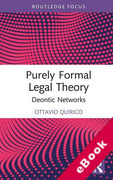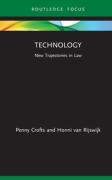
This book explores one of the most pressing questions of our time: what happens to law when technological systems—algorithms, smart contracts, digital platforms—begin to regulate our lives as effectively as, or even more effectively than, traditional legal rules?
While many scholars have framed this debate in terms of efficiency, compliance, and enforcement, this book takes a step back to ask a deeper question: what is law, and what distinguishes it from mere technological control? Through three interconnected essays, the book moves across theory, contemporary issues, and history. It critiques the popular thesis of the “death of law” under conditions of algorithmic regulation, arguing that law itself can be seen as a technology of a special kind. The book’s central argument is that technological regulation does not ‘perfect’ the law by guaranteeing compliance. Instead, it abolishes the normative dimension that defines law: the distinction between what is and what ought to be. When algorithms collapse this gap – by making non-compliance impossible – the unique reality that law creates disappears. Accessible, provocative, and interdisciplinary, this is not simply a book about legal theory. It is a book about the future of human freedom, responsibility, and political life in a world increasingly governed by technology. This book will appeal primarily to scholars and high-level students working in the areas of legal theory, the philosophy of law, and law and technology.