
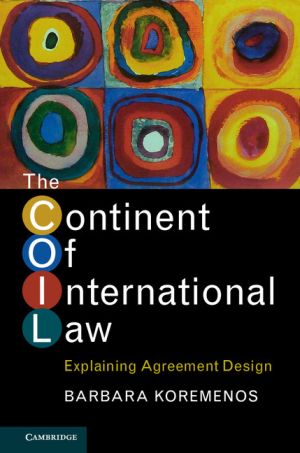
Every year, states negotiate, conclude, sign, and give effect to hundreds of new international agreements. Koremenos argues that the detailed design provisions of such agreements matter for phenomena that scholars, policymakers, and the public care about: when and how international cooperation occurs and is maintained.
Theoretically, Koremenos develops hypotheses regarding how cooperation problems like incentives to cheat can be confronted and moderated through law's detailed design provisions. Empirically, she exploits her data set composed of a random sample of international agreements in economics, the environment, human rights and security.
Her theory and testing leads to a consequential discovery: considering the vagaries of international politics, international cooperation looks more law-like than anarchical, with the detailed provisions of international law chosen in ways that increase the prospects and robustness of cooperation.
This nuanced and sophisticated 'continent of international law' can speak to scholars in any discipline where institutions, and thus institutional design, matter.










