
The eBooks we sell are sold as a single-user licence and are intended for the end user only.
The sale of some eBooks are restricted to certain countries. To alert you to such restrictions, please select the country of the billing address of your credit or debit card you wish to use for payment.
For further information see https://www.wildy.com/ebook-formats
Once the order is confirmed an e-mail will be sent to you to allow you to download the eBook. For UK purchases this will be automatic. For purchases outside the UK a member of staff will need to confirm the sale. (Staff are available to do this during normal business hours, Mon-Fri 8:30-17:00 UK time)
All eBooks are supplied firm sale and cannot be returned. If you believe there is a fault with your eBook then contact us on ebooks@wildy.com and we will help in resolving the issue. This does not affect your statutory rights.
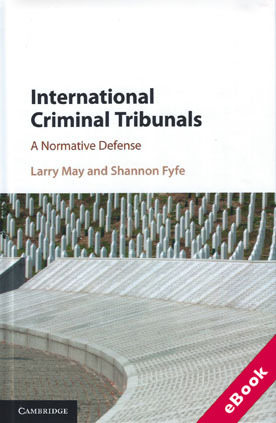
In the last two decades there has been a meteoric rise of international criminal tribunals and courts and also a strengthening chorus of critics against them. Today it is hard to find strong defenders of international criminal tribunals and courts.
This book attempts such a defense against an array of critics. It offers a nuanced defense, accepting many criticisms but arguing that the idea of international criminal tribunals can be defended as providing the fairest way to deal with mass atrocity crimes in a global arena. Fairness and moral legitimacy will be at the heart of this defense.
The authors take up the economic and political arguments that have been powerfully expressed, as well as arguments about sovereignty, punishment, responsibility, and evidence; but in the end they show that these arguments do not defeat the idea of international criminal courts and tribunals.










