The eBooks we sell are sold as a single-user licence and are intended for the end user only.
The sale of some eBooks are restricted to certain countries. To alert you to such restrictions, please select the country of the billing address of your credit or debit card you wish to use for payment.
For further information see https://www.wildy.com/ebook-formats
Once the order is confirmed an e-mail will be sent to you to allow you to download the eBook. For UK purchases this will be automatic. For purchases outside the UK a member of staff will need to confirm the sale. (Staff are available to do this during normal business hours, Mon-Fri 8:30-17:00 UK time)
All eBooks are supplied firm sale and cannot be returned. If you believe there is a fault with your eBook then contact us on ebooks@wildy.com and we will help in resolving the issue. This does not affect your statutory rights.
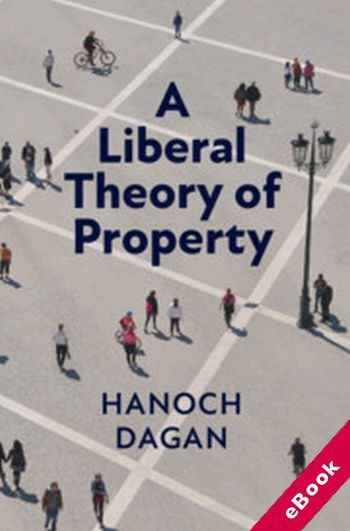
Property enhances autonomy for most people, but not for all. Because it both empowers and disables, property requires constant vigilance. A Liberal Theory of Property addresses key questions: how can property be justified? What core values should property law advance, and how do those values interrelate? How is a liberal state obligated to act when shaping property law? In a liberal polity, the primary commitment to individual autonomy dominates the justification of property, founding it on three pillars: carefully delineated private authority, structural (but not value) pluralism, and relational justice. A genuinely liberal property law meets the legitimacy challenge confronting property by expanding people's opportunities for individual and collective self-determination while carefully restricting their options of interpersonal domination. The book shows how the three pillars of liberal property account for core features of existing property systems, provide a normative vocabulary for evaluating central doctrines, and offer directions for urgent reforms.