The eBooks we sell are sold as a single-user licence and are intended for the end user only.
The sale of some eBooks are restricted to certain countries. To alert you to such restrictions, please select the country of the billing address of your credit or debit card you wish to use for payment.
For further information see https://www.wildy.com/ebook-formats
Once the order is confirmed an e-mail will be sent to you to allow you to download the eBook. For UK purchases this will be automatic. For purchases outside the UK a member of staff will need to confirm the sale. (Staff are available to do this during normal business hours, Mon-Fri 8:30-17:00 UK time)
All eBooks are supplied firm sale and cannot be returned. If you believe there is a fault with your eBook then contact us on ebooks@wildy.com and we will help in resolving the issue. This does not affect your statutory rights.
Due to a technical issue some ebooks are not available to order.
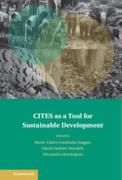
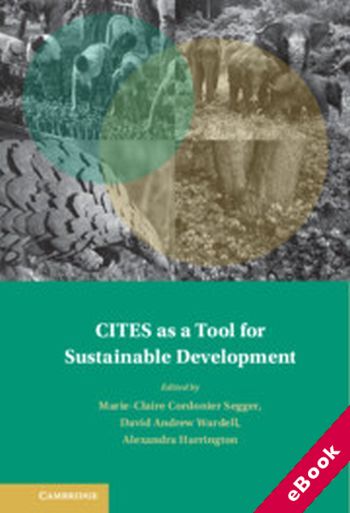
Saving endangered species presents a critical and increasingly pressing challenge for conservation and sustainability movements, and is also matter of survival and livelihoods for the world's poorest and vulnerable communities. In 1973, a global Convention on International Trade in Endangered Species (CITES) was adopted to stem the extinction of many species. In 2015, as part of the Sustainable Development Goals (SDG 15) the United Nations called for urgent action to protect endangered species and their natural habitats. This volume focuses on the legal implementation of CITES to achieve the global SDGs. Activating interdisciplinary analysis and case studies across jurisdictions, the contributors analyse the potential for CITES to promote more sustainable development, proposing international and national regulatory innovations for implementing CITES. They consider recent innovations and key intervention points along flora and fauna value chains, advancing coherent recommendations to strengthen CITES implementation, including through the regulation of trade in endangered species globally and locally.