The eBooks we sell are sold as a single-user licence and are intended for the end user only.
The sale of some eBooks are restricted to certain countries. To alert you to such restrictions, please select the country of the billing address of your credit or debit card you wish to use for payment.
For further information see https://www.wildy.com/ebook-formats
Once the order is confirmed an e-mail will be sent to you to allow you to download the eBook. For UK purchases this will be automatic. For purchases outside the UK a member of staff will need to confirm the sale. (Staff are available to do this during normal business hours, Mon-Fri 8:30-17:00 UK time)
All eBooks are supplied firm sale and cannot be returned. If you believe there is a fault with your eBook then contact us on ebooks@wildy.com and we will help in resolving the issue. This does not affect your statutory rights.
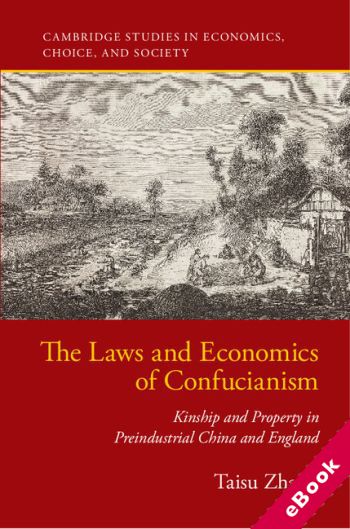
Tying together cultural history, legal history, and institutional economics, The Laws and Economics of Confucianism: Kinship and Property in Pre-Industrial China and England offers a novel argument as to why Chinese and English pre-industrial economic development went down different paths. The dominance of Neo-Confucian social hierarchies in Late Imperial and Republican China, under which advanced age and generational seniority were the primary determinants of sociopolitical status, allowed many poor but senior individuals to possess status and political authority highly disproportionate to their wealth. In comparison, landed wealth was a fairly strict prerequisite for high status and authority in the far more 'individualist' society of early modern England, essentially excluding low-income individuals from secular positions of prestige and leadership. Zhang argues that this social difference had major consequences for property institutions and agricultural production.