
The eBooks we sell are sold as a single-user licence and are intended for the end user only.
The sale of some eBooks are restricted to certain countries. To alert you to such restrictions, please select the country of the billing address of your credit or debit card you wish to use for payment.
For further information see https://www.wildy.com/ebook-formats
Once the order is confirmed an e-mail will be sent to you to allow you to download the eBook. For UK purchases this will be automatic. For purchases outside the UK a member of staff will need to confirm the sale. (Staff are available to do this during normal business hours, Mon-Fri 8:30-17:00 UK time)
All eBooks are supplied firm sale and cannot be returned. If you believe there is a fault with your eBook then contact us on ebooks@wildy.com and we will help in resolving the issue. This does not affect your statutory rights.
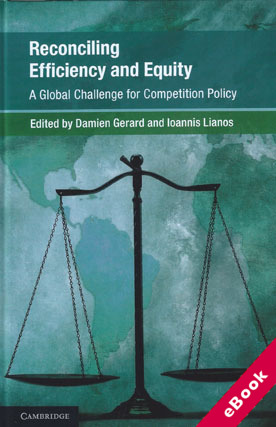
Due to the growing influence of economics and economists in competition law and policy discourse and the internationalization of antitrust, the equity versus efficiency trade-off debate has played a defining role in the transformation of the dominant paradigm governing competition law enforcement since at least the 1970s.
The debate remains crucial today as issues of economic inequality and its interaction with efficiency become of central concern to policy and decision-makers in competition law, as well as in other spheres of public policy. Despite their central role in the grammar of competition law on the global plane, the intellectual underpinnings of the interactions between “equity” and “efficiency” in the context of competition law have never been examined in-depth.
This book aims precisely to fill this gap by discussing new approaches in understanding the role of efficiency and equity concerns in competition law.










