
The eBooks we sell are sold as a single-user licence and are intended for the end user only.
The sale of some eBooks are restricted to certain countries. To alert you to such restrictions, please select the country of the billing address of your credit or debit card you wish to use for payment.
For further information see https://www.wildy.com/ebook-formats
Once the order is confirmed an e-mail will be sent to you to allow you to download the eBook. For UK purchases this will be automatic. For purchases outside the UK a member of staff will need to confirm the sale. (Staff are available to do this during normal business hours, Mon-Fri 8:30-17:00 UK time)
All eBooks are supplied firm sale and cannot be returned. If you believe there is a fault with your eBook then contact us on ebooks@wildy.com and we will help in resolving the issue. This does not affect your statutory rights.
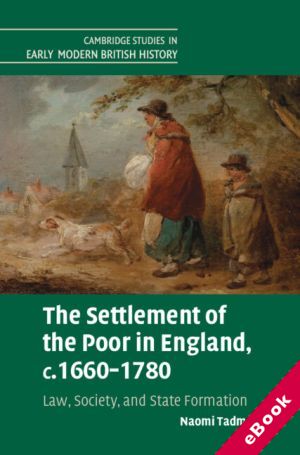
In 1662, in the aftermath of the Restoration, parliament passed new legislation for the settlement and removal of the poor. Important provisions were finalised in no more than a few days. But once the settlement of the poor was set in law it became an agent of historical change that affected society, state formation, and the lives of millions in Britain and beyond for centuries to come. Within a few decades, practices of local government were transformed. In towns and villages hierarchies of social status and gender were affected. The rising empire employed the settlement administration to mobilise forces for large-scale international wars and to deal with soldiers' wives and children left behind. The huge number of bureaucratic forms generated following the new policies made a lasting impact on administrative culture.
The Settlement of the Poor in England is about social change and about history's unintended consequences. It is also about the struggles and experiences of individuals and communities. It reminds us how the settlement legislation still resonates today.











