
The eBooks we sell are sold as a single-user licence and are intended for the end user only.
The sale of some eBooks are restricted to certain countries. To alert you to such restrictions, please select the country of the billing address of your credit or debit card you wish to use for payment.
For further information see https://www.wildy.com/ebook-formats
Once the order is confirmed an e-mail will be sent to you to allow you to download the eBook. For UK purchases this will be automatic. For purchases outside the UK a member of staff will need to confirm the sale. (Staff are available to do this during normal business hours, Mon-Fri 8:30-17:00 UK time)
All eBooks are supplied firm sale and cannot be returned. If you believe there is a fault with your eBook then contact us on ebooks@wildy.com and we will help in resolving the issue. This does not affect your statutory rights.
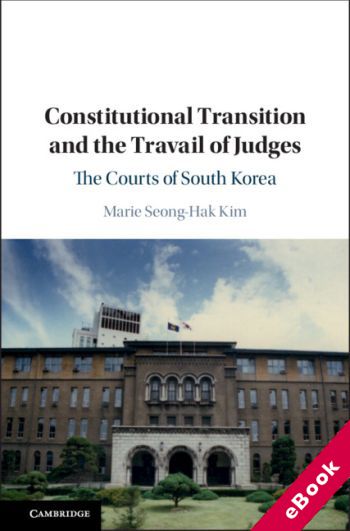
This book looks at the history of the courts in South Korea from 1945 to the contemporary period. It sets forth the evolution of the judicial process and jurisprudence in the context of the nation's political and constitutional transitions.
The focus is on constitutional authoritarianism in the 1970s under President Park Chung Hee, when judges faced a positivist crisis as their capacity to protect individual rights and restrain the government was impaired by the constitutional language. Caught between the contending duties of implementing the law and pursuing justice, the judges adhered to formal legal rationality and preserved the fundamental constitutional order, which eventually proved essential in the nation's democratization in the late 1980s.
Addressing both democratic and authoritarian rule of law, this volume prompts fresh debate on judicial restraint and engagement in comparative perspectives.











