
The eBooks we sell are sold as a single-user licence and are intended for the end user only.
The sale of some eBooks are restricted to certain countries. To alert you to such restrictions, please select the country of the billing address of your credit or debit card you wish to use for payment.
For further information see https://www.wildy.com/ebook-formats
Once the order is confirmed an e-mail will be sent to you to allow you to download the eBook. For UK purchases this will be automatic. For purchases outside the UK a member of staff will need to confirm the sale. (Staff are available to do this during normal business hours, Mon-Fri 8:30-17:00 UK time)
All eBooks are supplied firm sale and cannot be returned. If you believe there is a fault with your eBook then contact us on ebooks@wildy.com and we will help in resolving the issue. This does not affect your statutory rights.
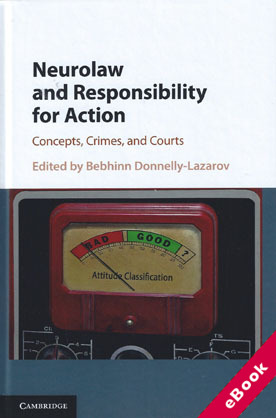
Law regulates human behaviour, a phenomenon about which neuroscience has much to say. Neuroscience can tell us whether a defendant suffers from a brain abnormality, or injury and it can correlate these neural deficits with criminal offending.
Using fMRI and other technologies it might indicate whether a witness is telling lies or the truth. It can further propose neuro-interventions to 'change' the brains of offenders and so to reduce their propensity to offend. And, it can make suggestions about whether a defendant knows or merely suspects a prohibited state of affairs; so, drawing distinctions among the mental states that are central to legal responsibility.
Each of these matters has philosophical import; is a neurological 'deficit' inculpatory or exculpatory; what is the proper role for law if the mind is no more than the brain; is lying really a brain state and can neuroscience really 'read' the brain?
In this edited collection, leading contributors to the field provide new insights on these matters, bringing to light the great challenges that arise when disciplinary boundaries merge.











