
The eBooks we sell are sold as a single-user licence and are intended for the end user only.
The sale of some eBooks are restricted to certain countries. To alert you to such restrictions, please select the country of the billing address of your credit or debit card you wish to use for payment.
For further information see https://www.wildy.com/ebook-formats
Once the order is confirmed an e-mail will be sent to you to allow you to download the eBook. For UK purchases this will be automatic. For purchases outside the UK a member of staff will need to confirm the sale. (Staff are available to do this during normal business hours, Mon-Fri 8:30-17:00 UK time)
All eBooks are supplied firm sale and cannot be returned. If you believe there is a fault with your eBook then contact us on ebooks@wildy.com and we will help in resolving the issue. This does not affect your statutory rights.
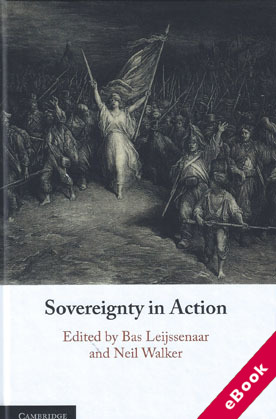
Sovereignty in premodern times evoked the dynastic figure of the 'sovereign' or territorial monarch. In modern times, it became a more abstract idea, referring to the power of the state, later of the people or 'the popular sovereign' as articulated and refined through constitutional arrangements.
Today these inherited understandings of sovereignty confront various new challenges, including those of globalization, privatization of power, and the rise of sub-state nationalism. An examination of key historical writers and trends from the seventeenth century onwards, including Hobbes, Bodin, Constant, Rousseau and Schmitt, brings out these developments and challenges.
Sovereignty remains a malleable and 'active' feature of the global configuration of power. Will sovereignty become a redundant concept over time, or will it remain a key part of the grammar of modern politics?










