
The eBooks we sell are sold as a single-user licence and are intended for the end user only.
The sale of some eBooks are restricted to certain countries. To alert you to such restrictions, please select the country of the billing address of your credit or debit card you wish to use for payment.
For further information see https://www.wildy.com/ebook-formats
Once the order is confirmed an e-mail will be sent to you to allow you to download the eBook. For UK purchases this will be automatic. For purchases outside the UK a member of staff will need to confirm the sale. (Staff are available to do this during normal business hours, Mon-Fri 8:30-17:00 UK time)
All eBooks are supplied firm sale and cannot be returned. If you believe there is a fault with your eBook then contact us on ebooks@wildy.com and we will help in resolving the issue. This does not affect your statutory rights.
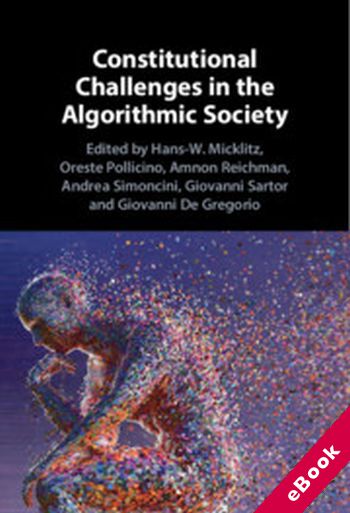
New technologies have always challenged the social, economic, legal, and ideological status quo. Constitutional law is no less impacted by such technologically driven transformations, as the state must formulate a legal response to new technologies and their market applications, as well as the state's own use of new technology. In particular, the development of data collection, data mining, and algorithmic analysis by public and private actors present unique challenges to public law at the doctrinal as well as the theoretical level. This collection, aimed at legal scholars and practitioners, describes the constitutional challenges created by the algorithmic society. It offers an important synthesis of the state of play in law and technology studies, addressing the challenges for fundamental rights and democracy, the role of policy and regulation, and the responsibilities of private actors.










