
The eBooks we sell are sold as a single-user licence and are intended for the end user only.
The sale of some eBooks are restricted to certain countries. To alert you to such restrictions, please select the country of the billing address of your credit or debit card you wish to use for payment.
For further information see https://www.wildy.com/ebook-formats
Once the order is confirmed an e-mail will be sent to you to allow you to download the eBook. For UK purchases this will be automatic. For purchases outside the UK a member of staff will need to confirm the sale. (Staff are available to do this during normal business hours, Mon-Fri 8:30-17:00 UK time)
All eBooks are supplied firm sale and cannot be returned. If you believe there is a fault with your eBook then contact us on ebooks@wildy.com and we will help in resolving the issue. This does not affect your statutory rights.
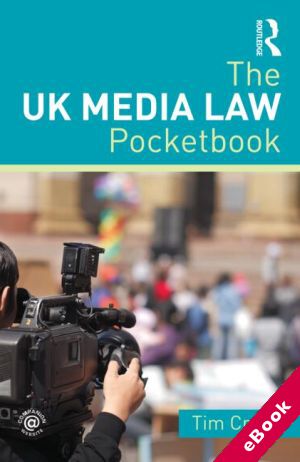
As media law becomes more complicated and some of the leading textbooks thicker and larger, this concise guide provides core information without patronizing those with existing knowledge or bamboozling those with little expertise. Suitable for journalists, media workers, and anyone in the cultural or publishing industries, the book engages and addresses the Internet and blogging, social networking, instant messaging, digital multi-media publication and consumption as well as traditional print and broadcast. Each chapter covers substantive 'black letter law' and regulation/ethics, and kept in mind throughout will be the difference in duties and obligations between words and pictures, print and broadcasting. The focus is on the law relating to England & Wales, but with references to key differences to bear in mind in Scotland and Northern Ireland. Chapters start with bullet points, then flesh out the details and summarize pitfalls to avoid. Readers are left in no doubt about liabilities and potential penalties.










