
The eBooks we sell are sold as a single-user licence and are intended for the end user only.
The sale of some eBooks are restricted to certain countries. To alert you to such restrictions, please select the country of the billing address of your credit or debit card you wish to use for payment.
For further information see https://www.wildy.com/ebook-formats
Once the order is confirmed an e-mail will be sent to you to allow you to download the eBook. For UK purchases this will be automatic. For purchases outside the UK a member of staff will need to confirm the sale. (Staff are available to do this during normal business hours, Mon-Fri 8:30-17:00 UK time)
All eBooks are supplied firm sale and cannot be returned. If you believe there is a fault with your eBook then contact us on ebooks@wildy.com and we will help in resolving the issue. This does not affect your statutory rights.
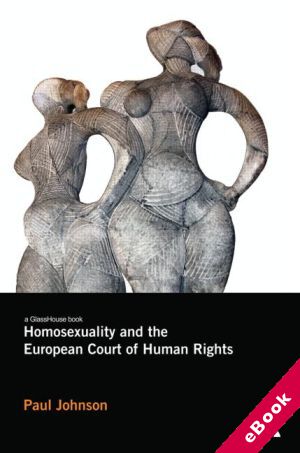
Homosexuality and the European Court of Human Rights is the first book-length study of the Court's jurisprudence in respect of sexual orientation. It provides a socio-legal analysis of the substantial number of decisions and judgments of the Strasbourg organs on the wide range of complaints brought by gay men and lesbians under the European Convention on Human Rights.
Providing a systematic analysis of Strasbourg case law since 1955 and examining decades of decisions that have hitherto remained obscure, the book considers the evolution of the Court's interpretation of the Convention and how this has fashioned lesbian and gay rights in Europe.
Going beyond doctrinal analysis by employing a nuanced sociological consideration of Strasbourg jurisprudence, Paul Johnson shows how the Court is a site at which homosexuality is both socially constructed and regulated. He argues that although the Convention is conceived as a 'living instrument' to be interpreted 'in the light of present-day conditions' the Court's judgments have frequently forged and advanced new social conditions in respect of homosexuality.
Johnson argues that the Court's jurisprudence has an extra-legal importance because it provides an authoritative and powerful discursive resource that can be mobilized by lesbians and gay men to challenge homophobic and heteronormative social relations in contemporary societies. As such, the book considers how the Court's interpretation of the Convention might be evolved in the future to better protect lesbian and gay rights and lives.










