
The eBooks we sell are sold as a single-user licence and are intended for the end user only.
The sale of some eBooks are restricted to certain countries. To alert you to such restrictions, please select the country of the billing address of your credit or debit card you wish to use for payment.
For further information see https://www.wildy.com/ebook-formats
Once the order is confirmed an e-mail will be sent to you to allow you to download the eBook. For UK purchases this will be automatic. For purchases outside the UK a member of staff will need to confirm the sale. (Staff are available to do this during normal business hours, Mon-Fri 8:30-17:00 UK time)
All eBooks are supplied firm sale and cannot be returned. If you believe there is a fault with your eBook then contact us on ebooks@wildy.com and we will help in resolving the issue. This does not affect your statutory rights.
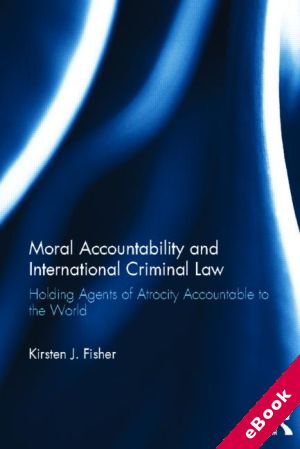
This book examines international criminal law from a normative perspective and lays out how responsible agents, individuals and the collectives they comprise, ought to be held accountable to the world for the commission of atrocity. The author provides criteria for determining the kinds of actions that should be addressed through international criminal law. Additionally, it asks, and answers, how individual responsibility can be determined in the context of collectively perpetrated political crimes and whether an international criminal justice system can claim universality in a culturally plural world. The book also examines the function of international criminal law and finally considers how the goals and purposes of international law can best be institutionally supported. This book is of particular interest to a multidisciplinary academic audience in political science, philosophy, and law, however the book is written in clear jargon-free prose that is intended to render the arguments accessible to the non-specialist reader interested in global justice, human rights and international criminal law.










