
The eBooks we sell are sold as a single-user licence and are intended for the end user only.
The sale of some eBooks are restricted to certain countries. To alert you to such restrictions, please select the country of the billing address of your credit or debit card you wish to use for payment.
For further information see https://www.wildy.com/ebook-formats
Once the order is confirmed an e-mail will be sent to you to allow you to download the eBook. For UK purchases this will be automatic. For purchases outside the UK a member of staff will need to confirm the sale. (Staff are available to do this during normal business hours, Mon-Fri 8:30-17:00 UK time)
All eBooks are supplied firm sale and cannot be returned. If you believe there is a fault with your eBook then contact us on ebooks@wildy.com and we will help in resolving the issue. This does not affect your statutory rights.
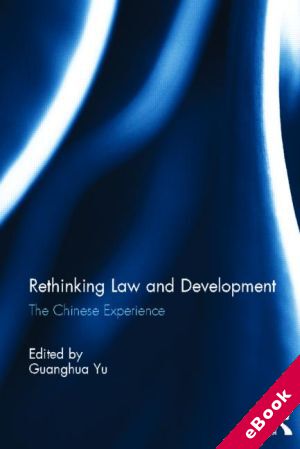
This book is the result of the collective effort of some of the foremost experts and scholars of Chinese law, Asian law, and Chinese economics and carefully examines the relationship between law and China's economic development. Serious inquiries and candid opinions of the contributors have made for stimulating discussion and debate in many controversial areas.
This book is likely to result in further research into factors affecting China's economic development, political change, and China's interaction with the international community. The book explores the development of the Chinese legal system from both China's historical perspective, taking into account the specific political and socioeconomic factors that are shaping Chinese law, and from a comparative perspective exploring the interaction between China and the rest of the world.
The book brings together key international scholars of Chinese law and economics including Hualing Fu, Roda Mushkat, Randall Peerenboom, Zhigang Tao and Frank Upham. The first part of the book focuses on the linkages between the formal law and China's economic development, looking at Chinese courts, economic institutions and firm behaviour as well as contract enforcement and property rights. Part two deals with issues of law, human rights, and social justice as they relate to economic and human development. Taken as a whole, the book offers a unique discourse on the interaction between law and economic and human development in China.










