
The eBooks we sell are sold as a single-user licence and are intended for the end user only.
The sale of some eBooks are restricted to certain countries. To alert you to such restrictions, please select the country of the billing address of your credit or debit card you wish to use for payment.
For further information see https://www.wildy.com/ebook-formats
Once the order is confirmed an e-mail will be sent to you to allow you to download the eBook. For UK purchases this will be automatic. For purchases outside the UK a member of staff will need to confirm the sale. (Staff are available to do this during normal business hours, Mon-Fri 8:30-17:00 UK time)
All eBooks are supplied firm sale and cannot be returned. If you believe there is a fault with your eBook then contact us on ebooks@wildy.com and we will help in resolving the issue. This does not affect your statutory rights.
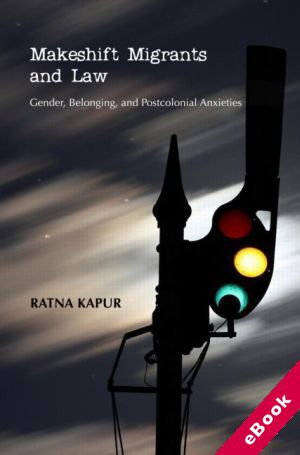
This book unmasks the cultural and gender stereotypes that inform the legal regulation of the migrant. It critiques the postcolonial perspective on how belonging and non-belonging are determined by the sexual, cultural, and familial norms on which law is based as well as the historical backdrop of the colonial encounter, which differentiated overtly between the legitimate and illegitimate subject.
The complexities and layering of the migrant’s existence are seen, in the book, to be obscured by the apparatus of the law. The author elaborates on how law can both advance and impede the rights of the migrant subject and how legal interventions are constructed around frameworks rooted in the boundaries of difference, protection of the sovereignty of the nation-state, and the myth of the all-embracing liberal subject. This produces the ‘Other’ and reinforces essentialised assumptions about gender and cultural difference.
The author foregrounds the perspective of the subaltern migrant subject, exposing the deeper issues implicated in the debates over migration and the rights claims of migrants, primarily in the context of women and religious minorities in India.











