
The eBooks we sell are sold as a single-user licence and are intended for the end user only.
The sale of some eBooks are restricted to certain countries. To alert you to such restrictions, please select the country of the billing address of your credit or debit card you wish to use for payment.
For further information see https://www.wildy.com/ebook-formats
Once the order is confirmed an e-mail will be sent to you to allow you to download the eBook. For UK purchases this will be automatic. For purchases outside the UK a member of staff will need to confirm the sale. (Staff are available to do this during normal business hours, Mon-Fri 8:30-17:00 UK time)
All eBooks are supplied firm sale and cannot be returned. If you believe there is a fault with your eBook then contact us on ebooks@wildy.com and we will help in resolving the issue. This does not affect your statutory rights.
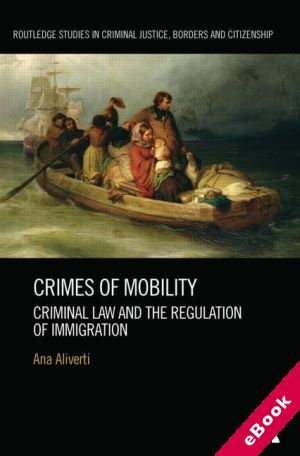
This book examines the role of criminal law in the enforcement of immigration controls over the last two decades in Britain. The criminalization of immigration status has historically served functions of exclusion and control against those who defy the state's powers over its territory and population. In the last two decades, the powers to exclude and punish have been enhanced by the expansion of the catalogue of immigration offences and their more systematic enforcement.
This book is the first in-depth analysis on criminal offences in Britain, and presents original empirical material about the use of criminal powers against suspected immigration wrongdoers. Based on interviews with practitioners and staff at the UK Border Agency and data from court cases involving immigration defendants, it examines prosecution decision making and the proceedings before the criminal justice system. Crimes of Mobility critically analyses the criminalization of immigration status and, more generally, the functions of the criminal law in immigration enforcement, from a legal and normative perspective. It will be of interest to academics and research students working on criminology, criminal law, criminal justice, socio-legal studies, migration and refugee studies, and human rights, as well as criminal law and immigration practitioners.











