
The eBooks we sell are sold as a single-user licence and are intended for the end user only.
The sale of some eBooks are restricted to certain countries. To alert you to such restrictions, please select the country of the billing address of your credit or debit card you wish to use for payment.
For further information see https://www.wildy.com/ebook-formats
Once the order is confirmed an e-mail will be sent to you to allow you to download the eBook. For UK purchases this will be automatic. For purchases outside the UK a member of staff will need to confirm the sale. (Staff are available to do this during normal business hours, Mon-Fri 8:30-17:00 UK time)
All eBooks are supplied firm sale and cannot be returned. If you believe there is a fault with your eBook then contact us on ebooks@wildy.com and we will help in resolving the issue. This does not affect your statutory rights.
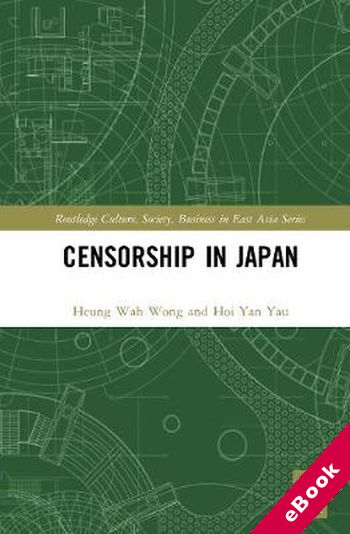
This book explores censorship, particularly film and video censorship, in Japan in modern times. It shows how most censorship has been the film and video industry exercising self-censorship, but how this system has been problematic in that it has allowed dominant players in the industry to impose their own standards and exclude independent film makers. It outlines notable obscenity cases, and discusses how industry self-censorship bodies have been undermined both by industry outsiders setting up their own alternative regimes, and by the industry self-censorship bodies themselves being prosecuted for obscenity.
The book also examines the conflict between the obscenity law, introduced in Meiji times when Japan was importing Western models, and the freedom of speech law, which was put in place by the American Occupation administration after the Second World War. The book concludes by assessing the current state of censorship in Japan and likely future developments.










