
The eBooks we sell are sold as a single-user licence and are intended for the end user only.
The sale of some eBooks are restricted to certain countries. To alert you to such restrictions, please select the country of the billing address of your credit or debit card you wish to use for payment.
For further information see https://www.wildy.com/ebook-formats
Once the order is confirmed an e-mail will be sent to you to allow you to download the eBook. For UK purchases this will be automatic. For purchases outside the UK a member of staff will need to confirm the sale. (Staff are available to do this during normal business hours, Mon-Fri 8:30-17:00 UK time)
All eBooks are supplied firm sale and cannot be returned. If you believe there is a fault with your eBook then contact us on ebooks@wildy.com and we will help in resolving the issue. This does not affect your statutory rights.
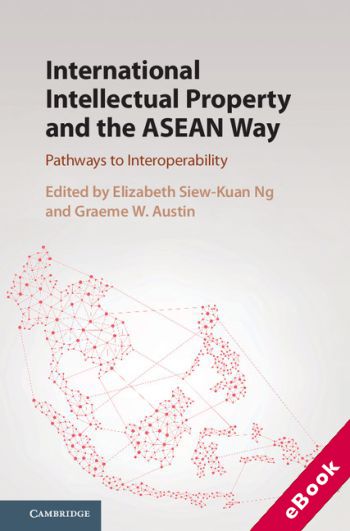
The Association of Southeast Asian Nations (ASEAN) is actively seeking ways for member countries to enhance their individual economic development within the context of overall regional advancement. Central to this is the creation of a regional intellectual property framework.
This book examines the efforts to move beyond sovereign protections of intellectual property rights and establish meaningful inter-state cooperation on intellectual property issues. Rather than aim for IP harmonization, ASEAN recognizes its internal diversity and pursues an agenda of “IP Interoperability”. The essays in this collection examine the unique dynamics of “interoperability,” analyzing the administration of intellectual property in a part of the world that is of increasing importance.
The book enables the reader to compare and contrast the ASEAN model to other approaches in regional cooperation, such as Europe and Latin America, and also explores private international law as a potential vehicle for interoperability.










