
The eBooks we sell are sold as a single-user licence and are intended for the end user only.
The sale of some eBooks are restricted to certain countries. To alert you to such restrictions, please select the country of the billing address of your credit or debit card you wish to use for payment.
For further information see https://www.wildy.com/ebook-formats
Once the order is confirmed an e-mail will be sent to you to allow you to download the eBook. For UK purchases this will be automatic. For purchases outside the UK a member of staff will need to confirm the sale. (Staff are available to do this during normal business hours, Mon-Fri 8:30-17:00 UK time)
All eBooks are supplied firm sale and cannot be returned. If you believe there is a fault with your eBook then contact us on ebooks@wildy.com and we will help in resolving the issue. This does not affect your statutory rights.
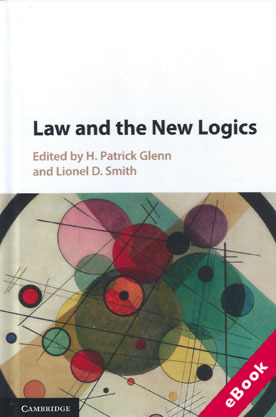
This book is unique in presenting an interdisciplinary conversation between jurists and logicians. It brings together scholars from both law and philosophy and looks at the application of 'the new logics' to law and legal ordering, in a number of legal systems.
The first Part explores the ways in which the new logics shed light on the functioning of legal orders, including the structure of legal argumentation and the rules of evidence. The second addresses how non-classical logics can help us to understand the interactions between multiple legal orders, in a range of contexts including domestic and international law. The final Part examines particular issues in the applicability of non-classical logics to legal reasoning.
This book will be of interest to jurisprudence and logic scholars and students who want to deepen their understanding of relationships between law and legal reasoning, and learn about recent developments in formal logic.










