
The eBooks we sell are sold as a single-user licence and are intended for the end user only.
The sale of some eBooks are restricted to certain countries. To alert you to such restrictions, please select the country of the billing address of your credit or debit card you wish to use for payment.
For further information see https://www.wildy.com/ebook-formats
Once the order is confirmed an e-mail will be sent to you to allow you to download the eBook. For UK purchases this will be automatic. For purchases outside the UK a member of staff will need to confirm the sale. (Staff are available to do this during normal business hours, Mon-Fri 8:30-17:00 UK time)
All eBooks are supplied firm sale and cannot be returned. If you believe there is a fault with your eBook then contact us on ebooks@wildy.com and we will help in resolving the issue. This does not affect your statutory rights.
Dissent in courts has always existed. It is natural and healthy that judges disagree on legal issues of a certain importance and difficulty. The question is if it is reasonable to conceal dissent. Not every legal system allows judges to explain their disagreement to the public in a separate opinion attached to the judgment of the court. Most constitutional courts do.
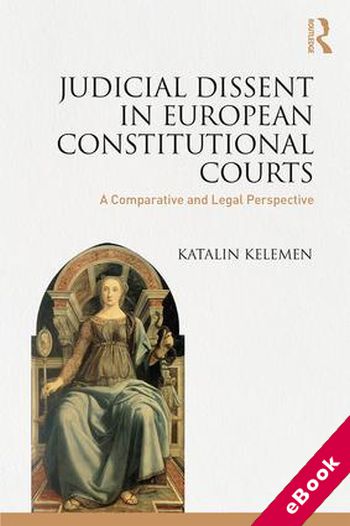
This book presents a comparative analysis of the practice of judicial dissent in constitutional courts from the perspective of the civil law tradition. It discusses the theoretical background, presents the history of the institution and today’s practice, thus laying down the basis for an accurate consideration of the phenomenon from a legal perspective.










