
The eBooks we sell are sold as a single-user licence and are intended for the end user only.
The sale of some eBooks are restricted to certain countries. To alert you to such restrictions, please select the country of the billing address of your credit or debit card you wish to use for payment.
For further information see https://www.wildy.com/ebook-formats
Once the order is confirmed an e-mail will be sent to you to allow you to download the eBook. For UK purchases this will be automatic. For purchases outside the UK a member of staff will need to confirm the sale. (Staff are available to do this during normal business hours, Mon-Fri 8:30-17:00 UK time)
All eBooks are supplied firm sale and cannot be returned. If you believe there is a fault with your eBook then contact us on ebooks@wildy.com and we will help in resolving the issue. This does not affect your statutory rights.
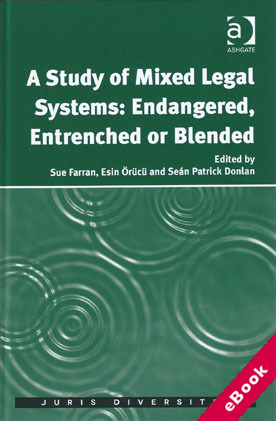
This book provides a fascinating and critical insight into familiar and less familiar mixed legal systems, taking the reader on a voyage of discovery from the islands of St Lucia and Guyana to those of Seychelles and Mauritius.
It considers those mixed systems which share boundaries with unmixed ones, such as Scotland and Quebec, and those located off-shore of major and dominant jurisdictions such as Jersey off the coasts of France’s civil law and England’s common law system, as well as Cyprus, situated between the influences of Europe and those of the Middle East.
The legal systems represented here have two things in common: they are mixed, although in different ways, and they may be in real or potential danger of losing their unique mixed legal status. It is this endangered status that brings together these leading contributors from across the globe to identify the constituent elements which make up their particular forms of mixed jurisdictions, and to reflect on where their vulnerabilities and strengths are to be found and why they may be at risk.
Through a forensic examination of the strengths and weaknesses of their own jurisdictions the authors are able to inform possible strategies for safeguarding mixed jurisdictions and identifying those that seem doomed to extinction.











