
The eBooks we sell are sold as a single-user licence and are intended for the end user only.
The sale of some eBooks are restricted to certain countries. To alert you to such restrictions, please select the country of the billing address of your credit or debit card you wish to use for payment.
For further information see https://www.wildy.com/ebook-formats
Once the order is confirmed an e-mail will be sent to you to allow you to download the eBook. For UK purchases this will be automatic. For purchases outside the UK a member of staff will need to confirm the sale. (Staff are available to do this during normal business hours, Mon-Fri 8:30-17:00 UK time)
All eBooks are supplied firm sale and cannot be returned. If you believe there is a fault with your eBook then contact us on ebooks@wildy.com and we will help in resolving the issue. This does not affect your statutory rights.
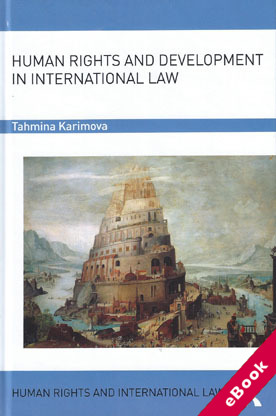
This book addresses the legal issues raised by the interaction between human rights and development in contemporary international law.
In particular, it charts the parameters of international law that states have to take into account in order to protect human rights in the process of development. In doing so, it departs from traditional analyses, where human rights are mainly considered as a political dimension of development.
Rather the book suggests focusing on human rights as a system of international norms establishing minimum standards of protection of individuals and minimum standards applicable in all circumstances on what is essential for a dignified existence.
The various dimensions covered in the book include: the discourse on human rights and development interrelationship, particularly opinio juris and the practice of states on the question; the notion of international assistance and cooperation in human rights law, under legal regimes such as international humanitarian law, and emerging rules in the area of protection of persons in the event of disasters; the extraterritorial scope of economic, social and cultural rights treaties; and legal principles on the respect for human rights in externally designed and planned development activities.
Analysis of these topics sheds light on the question of whether international law as it stands today addresses most of the issues concerning the protection of human rights in the development process.











