
The eBooks we sell are sold as a single-user licence and are intended for the end user only.
The sale of some eBooks are restricted to certain countries. To alert you to such restrictions, please select the country of the billing address of your credit or debit card you wish to use for payment.
For further information see https://www.wildy.com/ebook-formats
Once the order is confirmed an e-mail will be sent to you to allow you to download the eBook. For UK purchases this will be automatic. For purchases outside the UK a member of staff will need to confirm the sale. (Staff are available to do this during normal business hours, Mon-Fri 8:30-17:00 UK time)
All eBooks are supplied firm sale and cannot be returned. If you believe there is a fault with your eBook then contact us on ebooks@wildy.com and we will help in resolving the issue. This does not affect your statutory rights.
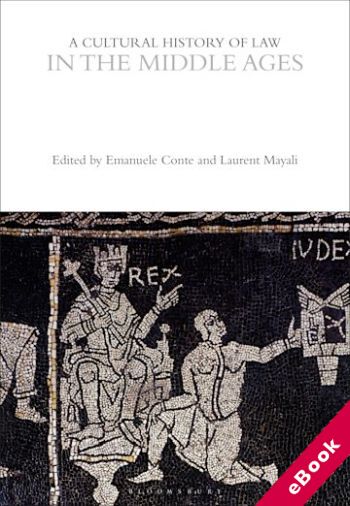
In 500, the legal order in Europe was structured around ancient customs, social practices and feudal values. By 1500, the effects of demographic change, new methods of farming and economic expansion had transformed the social and political landscape and had wrought radical change upon legal practices and systems throughout Western Europe. A Cultural History of Law in the Middle Ages explores this change and the rich and varied encounters between Christianity and Roman legal thought which shaped the period. Evolving from a combination of religious norms, local customs, secular legislations, and Roman jurisprudence, medieval law came to define an order that promoted new forms of individual and social representation, fostered the political renewal that heralded the transition from feudalism to the Early Modern state and contributed to the diffusion of a common legal language.
Drawing upon a wealth of textual and visual sources, A Cultural History of Law in the Middle Ages presents essays that examine key cultural case studies of the period on the themes of justice, constitution, codes, agreements, arguments, property and possession, wrongs, and the legal profession.










