
The eBooks we sell are sold as a single-user licence and are intended for the end user only.
The sale of some eBooks are restricted to certain countries. To alert you to such restrictions, please select the country of the billing address of your credit or debit card you wish to use for payment.
For further information see https://www.wildy.com/ebook-formats
Once the order is confirmed an e-mail will be sent to you to allow you to download the eBook. For UK purchases this will be automatic. For purchases outside the UK a member of staff will need to confirm the sale. (Staff are available to do this during normal business hours, Mon-Fri 8:30-17:00 UK time)
All eBooks are supplied firm sale and cannot be returned. If you believe there is a fault with your eBook then contact us on ebooks@wildy.com and we will help in resolving the issue. This does not affect your statutory rights.
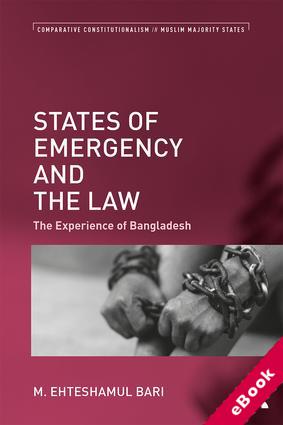
The declaration of a state of emergency can be a legitimate constitutional method to protect the interests of society in times of national crises provided it is not exercised in a manner that compromises commitment to democratic values, such as maintaining the rule of law and safeguarding the core rights. This book uses the case of Bangladesh, which has undergone five states of emergency, to explore the best means for ensuring the maintenance of these democratic values. To this end, this book draws from: a) the common themes in the experience of emergency powers under the constitutional framework of similarly situated polities, such as India and Pakistan, and b) the safeguards concerning the exercise of emergency powers contained in the constitutions of other developing and developed nations.
The comparative experiences of these jurisdictions provide insight into the mechanisms necessary during a state of emergency for ensuring a delicate balance between the necessity to prevent the state from being perished on the one hand, and to simultaneously uphold the rule of law and the core fundamental rights of individuals on the other. Consequently, the study identifies the flaws, deficiencies and lacunae of the constitutional provisions concerning emergency measures in Bangladesh and recommendations are advanced to rectify the defects.
This book will be a valuable resource for academics, researchers and policy-makers working in the areas of comparative constitutional law, human rights law, and Asian law











