
The eBooks we sell are sold as a single-user licence and are intended for the end user only.
The sale of some eBooks are restricted to certain countries. To alert you to such restrictions, please select the country of the billing address of your credit or debit card you wish to use for payment.
For further information see https://www.wildy.com/ebook-formats
Once the order is confirmed an e-mail will be sent to you to allow you to download the eBook. For UK purchases this will be automatic. For purchases outside the UK a member of staff will need to confirm the sale. (Staff are available to do this during normal business hours, Mon-Fri 8:30-17:00 UK time)
All eBooks are supplied firm sale and cannot be returned. If you believe there is a fault with your eBook then contact us on ebooks@wildy.com and we will help in resolving the issue. This does not affect your statutory rights.
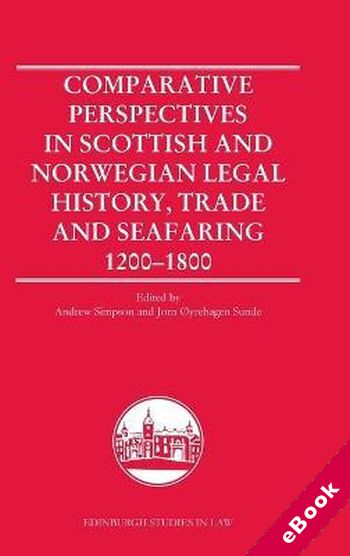
Examines the connections and points of contact between Norwegian law and Scots law.
There were significant points of contact and similarities in the ways in which the laws of Scotland and Norway developed. The Treaty of Perth of 1266 was of significance in the state formation of both countries, and in the determination of their territorial boundaries. The laws and customs applicable in the Orkneys and the Shetlands remain distinctive due to Norse influence, centuries after those islands became subject to Scottish sovereignty. The extensive trading links between two countries united by the North Sea raises the question of how trade between the territories was regulated.
This book brings together experts in Norwegian and Scottish legal, economic and political history to explore these points of contact. It breaks new ground, considering Scots law in terms of its historical interactions and similarities with another national legal system, rather than in terms of its place at the intersection between the common law and the civilian traditions.
This definitive reference work will form the basis of future studies in comparative legal history, and comparative law more generally, in relation to Scotland and Norway.










